
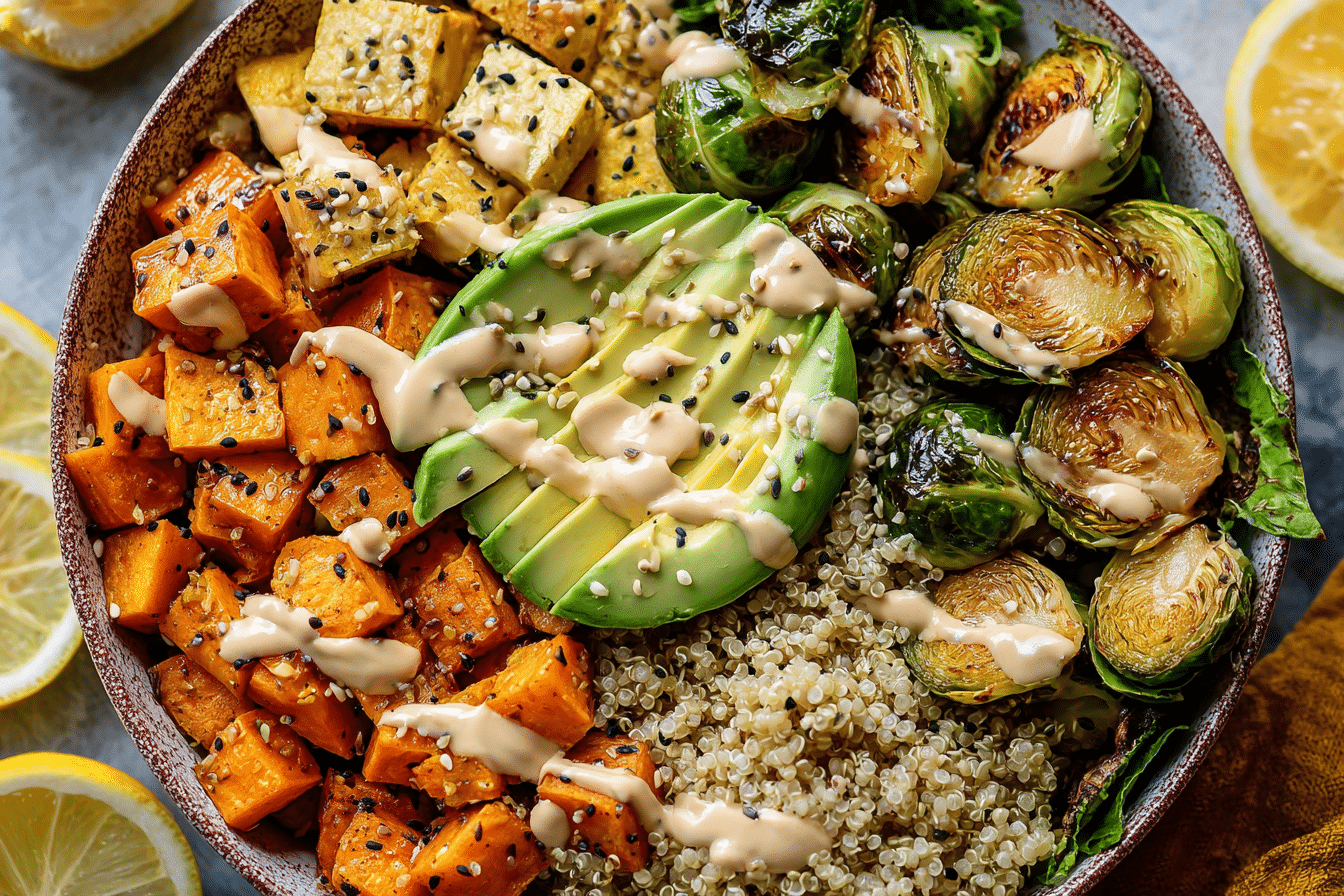
A roasted veggie Buddha bowl is the kind of meal that brings warmth and color to your table with every bite. Known for its vibrant ingredients, balance of flavors, and nourishing qualities, this bowl is a favorite among plant-based eaters and health-conscious cooks alike.
The term “Buddha bowl” typically refers to a one-bowl meal that’s packed with vegetables, whole grains, and plant protein — arranged artfully and often topped with a creamy dressing. While there’s no single origin for the dish, the name is thought to reflect the overflowing, rounded nature of Buddha’s belly — and these bowls are always full to the brim with goodness.
In this version, we focus on roasted seasonal vegetables, hearty grains, and a punchy tahini or lemony yogurt dressing. It’s a satisfying, customizable dish perfect for meal prep, weeknight dinners, or post-workout refueling.
Ingredients Overview
Each ingredient in this roasted veggie Buddha bowl plays a role in creating a balanced and delicious experience — both nutritionally and texturally.
Roasted Vegetables
Roasting transforms simple veggies into sweet, caramelized gems. The best combinations include:
-
Sweet Potato: Naturally sweet, soft, and rich in fiber and beta-carotene.
-
Cauliflower: Becomes golden and nutty when roasted; great texture.
-
Red Onion: Adds sweetness and sharpness when cooked.
-
Zucchini or Eggplant: Absorb flavors well and offer variety in texture.
-
Brussels Sprouts or Broccoli: Adds crunch and a bit of earthiness.
Tips:
-
Use olive oil, salt, pepper, and optional smoked paprika or cumin.
-
Roast at 400°F (200°C) for 25–35 minutes until caramelized and slightly crispy.
Whole Grains
Choose a base that complements the roasted vegetables:
-
Quinoa: High in protein and quick to cook.
-
Brown Rice: Nutty and filling.
-
Farro or Barley: Chewy and hearty, great for cooler months.
You can also use couscous or bulgur for a lighter base.
Protein
To make the bowl filling and balanced, include plant-based protein:
-
Chickpeas: Roast with spices for crunch.
-
Tofu: Bake or pan-fry for golden edges.
-
Tempeh: Slightly nutty, great when marinated.
-
Lentils: Add warmth and depth, especially green or black varieties.
For non-vegan options, grilled chicken or soft-boiled eggs work beautifully.
Fresh Toppings
Layer on freshness and texture:
-
Avocado: Creamy richness and healthy fats.
-
Shredded Carrots or Beets: Raw crunch and color.
-
Cucumber or Radishes: Bright, peppery contrast.
-
Baby Greens: Arugula, spinach, or kale bring bitterness and brightness.
Dressings & Sauces
A good dressing brings it all together:
-
Tahini Lemon Dressing: Creamy, tangy, and nutty.
-
Greek Yogurt Dressing: Cool and refreshing, especially with herbs.
-
Maple-Dijon Vinaigrette: A sweet-savory blend that pairs well with root vegetables.
Add a dash of sriracha or chili flakes if you like a bit of heat.
Step-by-Step Instructions
1. Roast the Vegetables
Preheat your oven to 400°F (200°C). Chop your chosen vegetables into uniform pieces for even roasting.
Toss them in olive oil, salt, black pepper, and optional spices (like paprika, cumin, or turmeric). Spread on a parchment-lined baking sheet in a single layer.
Roast for 25–35 minutes, flipping halfway, until golden and slightly crisp at the edges.
2. Cook the Grains
While the veggies roast, cook your grain of choice according to package instructions. Quinoa usually takes about 15 minutes; brown rice takes longer (around 40 minutes).
Fluff with a fork and season lightly with salt or a drizzle of olive oil.
3. Prepare the Protein
If using chickpeas, toss canned chickpeas with olive oil, salt, and paprika. Roast for 20–25 minutes until crispy.
For tofu, press it to remove moisture, cube it, and toss in oil and soy sauce before baking or pan-searing.
Tempeh can be sliced thin and marinated in soy sauce, lemon, and garlic before being lightly fried or baked.
4. Make the Dressing
Whisk together:
-
¼ cup tahini
-
Juice of 1 lemon
-
1 small garlic clove, minced
-
2–4 tbsp water (to thin)
-
Salt, to taste
-
Optional: maple syrup for sweetness or cumin for earthiness
Adjust consistency as needed — it should be pourable but not watery.
5. Assemble the Bowl
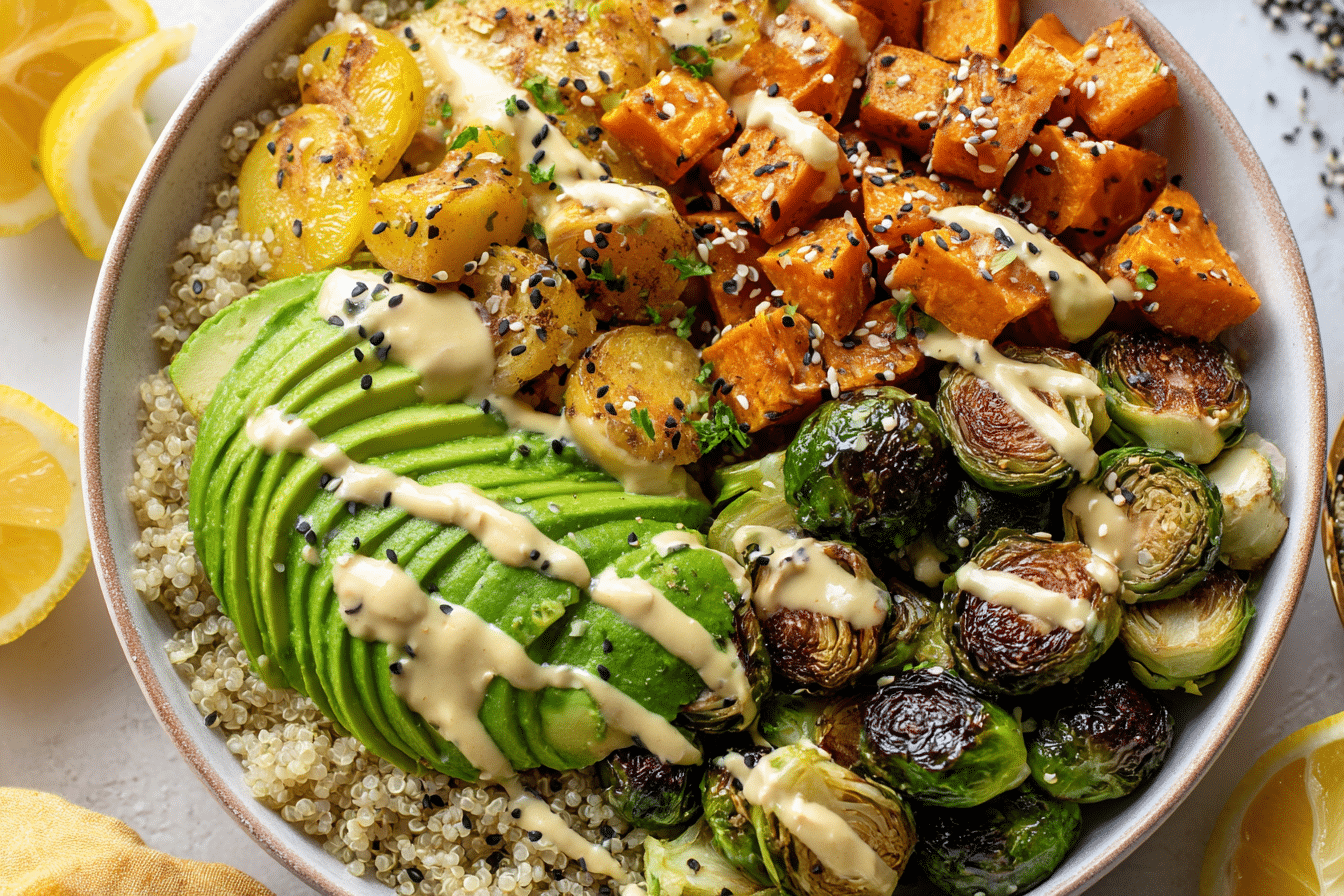
Start with your grain base, then layer the roasted veggies, protein, and raw toppings.
Drizzle generously with dressing, sprinkle with seeds (sunflower, pumpkin, or sesame), and garnish with herbs like parsley or cilantro.
Serve warm or at room temperature.
Tips, Variations & Substitutions
Cooking Tips
-
Roast veggies in separate batches if needed — some cook faster than others.
-
Use high heat (400–425°F) for browning and crisp edges.
-
Make dressing in a jar and shake it — easy to store and reuse.
Bowl Variations
-
Mediterranean Bowl: Use olives, hummus, feta, and lemon vinaigrette.
-
Southwest Bowl: Include black beans, corn, avocado, and a chipotle dressing.
-
Asian-Inspired Bowl: Try soba noodles, edamame, sesame tofu, and ginger-sesame dressing.
Substitutions
-
Gluten-Free: Use gluten-free grains like quinoa or rice.
-
Low-Carb: Swap grains for cauliflower rice or shredded cabbage.
-
Dairy-Free: Stick with tahini or vinaigrettes; avoid yogurt-based sauces.
Serving Ideas & Occasions
This roasted veggie Buddha bowl shines as a:
-
Workweek lunch: Great for meal prep; store components separately for freshness.
-
Meatless Monday dinner: Hearty and satisfying without meat.
-
Post-workout meal: Replenishes with protein, fiber, and healthy carbs.
-
Make-your-own bowl night: Let everyone customize their toppings and sauce.
Serve with sparkling water, kombucha, or herbal iced tea for a fresh finish.
Nutritional & Health Notes
Buddha bowls are nutritionally balanced, offering:
-
Complex carbs from whole grains
-
Fiber and antioxidants from vegetables
-
Plant-based protein from chickpeas or tofu
-
Healthy fats from tahini or avocado
They support digestive health, blood sugar balance, and long-lasting energy.
Portion size can be adjusted based on dietary needs. For a lighter option, go heavier on greens and lighter on grains.
This bowl is naturally vegan and can be adapted for gluten-free, paleo, or low-fat diets with simple swaps.
FAQs
Q1: Can I make Buddha bowls ahead of time?
A1: Yes! Roast the veggies, cook grains, and prep protein in advance. Store each separately and assemble just before eating. Add dressing fresh to avoid sogginess.
Q2: What are the best vegetables to roast?
A2: Sweet potatoes, cauliflower, broccoli, and bell peppers all roast beautifully. Choose vegetables with low water content for best results.
Q3: Can I eat Buddha bowls cold?
A3: Absolutely. Buddha bowls taste great cold, at room temperature, or warm. They’re flexible and meal-prep friendly.
Q4: What’s a good protein if I don’t eat tofu?
A4: Roasted chickpeas, tempeh, lentils, or even seared mushrooms are excellent alternatives. For a non-vegan option, try hard-boiled eggs or grilled chicken.
Q5: Can I use pre-cooked grains?
A5: Yes, pre-cooked or frozen grains (like brown rice or quinoa) work well and save time. Just warm them before assembling the bowl.
Q6: How long will leftovers last?
A6: Prepared ingredients last 3–4 days in the fridge. Store dressing separately to keep things fresh and crisp.
Q7: Is there a way to reduce oil in this recipe?
A7: Yes. Roast veggies with just a light spray of oil or use parchment paper. Air fry for even less oil. Opt for vinaigrettes over creamier dressings to reduce fat.
PrintRoasted Veggie Buddha Bowl – Colorful, Nourishing & Easy
This roasted veggie Buddha bowl is a vibrant, balanced meal filled with roasted vegetables, grains, and plant protein, topped with a creamy tahini lemon dressing.
Ingredients
-
1 sweet potato, diced
-
1 cup cauliflower florets
-
1 red onion, sliced
-
1 zucchini, chopped
-
1 tbsp olive oil
-
Salt and pepper to taste
-
1 cup cooked quinoa or brown rice
-
1 can chickpeas, drained
-
1 tsp paprika (optional, for chickpeas)
-
1 avocado, sliced
-
1 cup baby spinach or arugula
-
¼ cup shredded carrots or beets
-
2 tbsp sesame or pumpkin seeds
Dressing:
-
¼ cup tahini
-
Juice of 1 lemon
-
1 garlic clove, minced
-
2–4 tbsp water
-
Salt, to taste
-
Optional: 1 tsp maple syrup
Instructions
-
Preheat oven to 400°F (200°C). Toss vegetables with olive oil, salt, and pepper. Roast 25–35 minutes.
-
Season chickpeas and roast alongside vegetables for 20–25 minutes.
-
Cook quinoa or rice if not already prepared.
-
Make the dressing by whisking tahini, lemon, garlic, water, and salt.
-
Assemble bowls with grains, roasted veggies, chickpeas, greens, avocado, and carrots.
-
Drizzle with dressing and sprinkle with seeds.
Notes
-
Use seasonal veggies like squash, broccoli, or eggplant.
-
Store leftovers separately and assemble when ready to eat.
-
Add chili flakes for heat or herbs for freshness.