
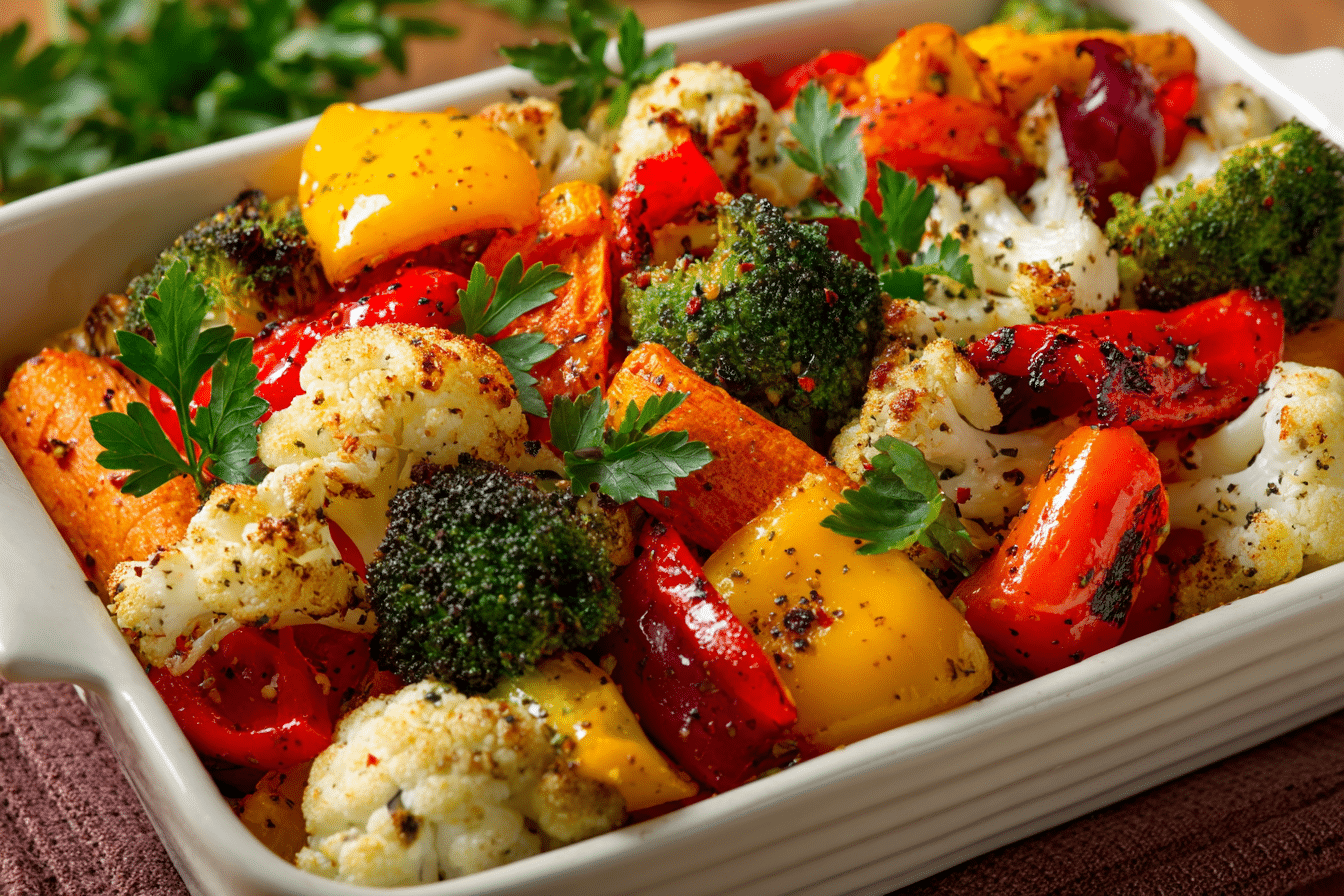
Few side dishes are as versatile, nourishing, and satisfying as Garlic Roasted Vegetables. With their caramelized edges, tender centers, and deep, savory flavor from roasted garlic and herbs, these vegetables turn any meal into a well-rounded, delicious experience.
This recipe is a staple for everything from holiday feasts to everyday weeknight dinners. It’s incredibly easy to customize based on what you have on hand — from root vegetables like carrots and potatoes to lighter options like bell peppers and zucchini.
The magic comes from roasting. As the vegetables cook at high heat, their natural sugars intensify, and garlic-infused olive oil transforms them into something truly crave-worthy. Whether served warm out of the oven or tossed into grain bowls, pasta, or salads, these vegetables are endlessly useful and always a hit.
Ingredients Overview
Garlic roasted vegetables don’t need fancy ingredients. What matters most is variety, balance, and seasoning.
Vegetables
Choose a colorful mix of firm and soft vegetables for contrast in flavor and texture.
Great combinations include:
-
Carrots: Slightly sweet, sturdy, and caramelize beautifully.
-
Broccoli florets: Roast into nutty, crispy bites.
-
Cauliflower: Develops a toasty, earthy flavor.
-
Red onion: Adds sweetness and color.
-
Bell peppers: Soften and become sweet.
-
Zucchini: Light and softens quickly — best added halfway through roasting.
-
Brussels sprouts: Roast until crisp on the outside and creamy inside.
Tip: Cut vegetables into similar sizes so they roast evenly.
Garlic
Fresh garlic cloves (minced or thinly sliced) are essential. When roasted, they mellow and infuse the oil, wrapping every vegetable in aromatic flavor.
Alternative: Use garlic powder if fresh garlic isn’t available, but fresh is preferred for complexity.
Olive Oil
A generous drizzle of extra virgin olive oil helps with even roasting, enhances flavor, and allows the garlic and herbs to cling to each piece.
Tip: Use just enough oil to lightly coat the vegetables without making them greasy.
Seasonings
Keep it simple and classic:
-
Salt and freshly ground black pepper
-
Dried thyme, oregano, or rosemary
-
Optional: Smoked paprika or crushed red pepper flakes for heat
Fresh herbs (parsley, basil, or dill) can be added after roasting for brightness.
Step-by-Step Instructions
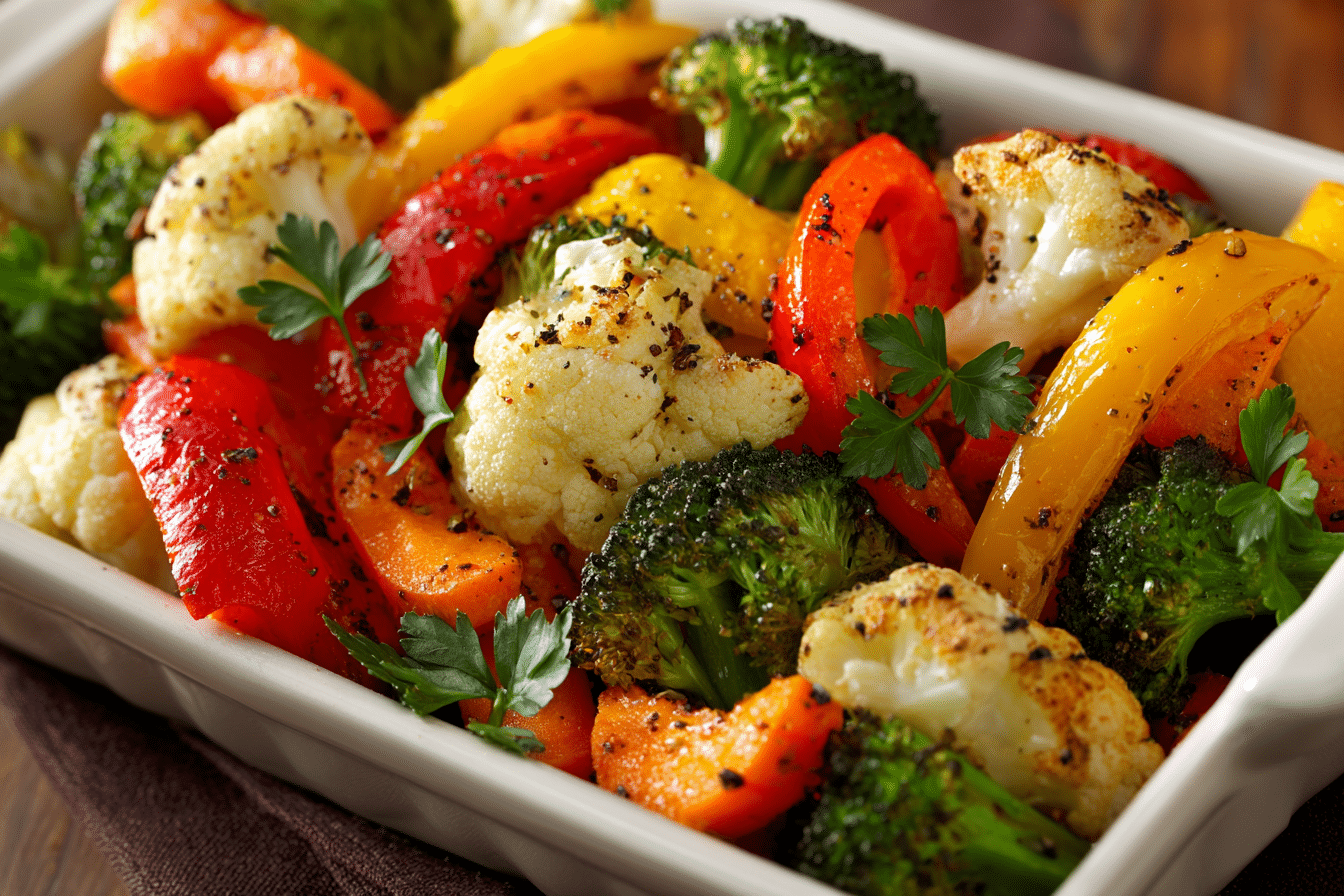
1. Preheat the Oven
Set your oven to 425°F (220°C). A high temperature is key to achieving crisp edges and deep caramelization.
Line a large baking sheet with parchment paper for easier cleanup.
2. Prep the Vegetables
Wash, peel (if needed), and chop all vegetables into bite-sized pieces — about 1-inch chunks. This size ensures they cook evenly and roast rather than steam.
Place all vegetables in a large mixing bowl.
3. Add Garlic and Seasonings
Add 3–4 tablespoons of olive oil and 4–5 minced garlic cloves to the bowl.
Sprinkle in:
-
1 tsp dried thyme
-
1 tsp dried oregano
-
1 tsp salt
-
½ tsp black pepper
Toss everything thoroughly to coat the vegetables in the garlic oil and seasoning blend.
4. Roast
Spread vegetables in a single, even layer on the prepared baking sheet. Avoid crowding — use two pans if needed.
Roast for 25–35 minutes, stirring once halfway through. Watch for:
-
Golden brown edges
-
Slight charring on smaller pieces
-
Fork-tender centers
Tip: If using softer vegetables like zucchini or tomatoes, add them in the last 10–15 minutes to prevent mushiness.
5. Finish and Serve
Remove from the oven and let cool slightly. Taste and adjust seasoning if needed.
Sprinkle with fresh herbs (like chopped parsley or basil) and an optional squeeze of lemon juice for brightness.
Serve warm or at room temperature.
Tips, Variations & Substitutions
-
Add sweetness: Toss in a drizzle of balsamic vinegar or maple syrup before roasting for a sweet-savory twist.
-
Cheesy finish: Add grated Parmesan or crumbled feta after roasting.
-
Herb swap: Use Italian seasoning, za’atar, or herbes de Provence for a flavor shift.
-
Vegan-friendly: This dish is naturally vegan and gluten-free.
-
Make it spicy: Add red pepper flakes or a touch of chili oil before roasting.
Vegetable variations:
-
Fall: Butternut squash, sweet potatoes, parsnips
-
Spring: Asparagus, radishes, green beans
-
Summer: Corn off the cob, eggplant, cherry tomatoes
Serving Ideas & Occasions
Garlic roasted vegetables are the kind of side dish that complements almost any main course.
-
Serve alongside grilled chicken, steak, or salmon
-
Toss into pasta with olive oil and Parmesan
-
Add to grain bowls with quinoa or farro and a dollop of hummus
-
Use as a pizza topping or sandwich filler
-
Pair with eggs and toast for a hearty breakfast or brunch
Perfect for:
-
Holiday dinners
-
Sunday meal prep
-
Weeknight meals
-
Potlucks and family gatherings
They’re vibrant, nutrient-rich, and full of comforting roasted flavor.
Nutritional & Health Notes
Garlic roasted vegetables are a powerhouse of fiber, vitamins, and antioxidants — and low in calories.
Roasting boosts natural sweetness and preserves nutrients, especially in root vegetables and cruciferous types like broccoli and Brussels sprouts.
Olive oil adds heart-healthy fats, while garlic may support immune and cardiovascular health.
Portion control is simple: 1 to 1½ cups per serving offers a satisfying amount of fiber and bulk.
Dietary notes:
-
Naturally gluten-free
-
Vegetarian and vegan
-
Easily made low-carb and paleo-friendly
Adding nuts, seeds, or cheese can increase protein and healthy fats if desired.
FAQs
Q1: Can I use frozen vegetables?
A1: Yes, but they won’t caramelize as well. Roast them from frozen at 425°F without thawing, and space them out on the pan to avoid steaming.
Q2: How do I prevent vegetables from becoming soggy?
A2: High heat, proper spacing, and minimal oil are key. Roast in a single layer with room between pieces so they crisp instead of steam.
Q3: Can I make these in advance?
A3: Absolutely. Roast and store in the fridge for up to 4 days. Reheat in the oven or air fryer to restore crisp edges.
Q4: What vegetables roast at the same rate?
A4: Carrots, potatoes, broccoli, cauliflower, and Brussels sprouts all roast well together. Softer vegetables like zucchini or tomatoes should be added later.
Q5: What’s the best oil to use?
A5: Extra virgin olive oil adds flavor and handles roasting temperatures well. You can also use avocado oil for a neutral alternative.
Q6: Can I roast garlic whole instead of minced?
A6: Yes! Whole garlic cloves (peeled or unpeeled) mellow beautifully when roasted and can be smashed into the veggies after cooking for extra flavor.
Q7: Is parchment paper necessary?
A7: It helps with cleanup and prevents sticking, but you can roast directly on a greased pan or use a silicone baking mat for similar results.
PrintGarlic Roasted Vegetables – A Simple, Flavor-Packed Side Dish
Crispy, tender garlic roasted vegetables tossed with herbs and olive oil — the perfect healthy side dish for any meal.
Ingredients
-
2 cups broccoli florets
-
2 cups chopped carrots
-
1 cup cauliflower florets
-
1 red bell pepper, sliced
-
1 red onion, chopped
-
1 zucchini, chopped (optional – add halfway)
-
4–5 garlic cloves, minced
-
3–4 tbsp olive oil
-
1 tsp salt
-
½ tsp black pepper
-
1 tsp dried thyme
-
1 tsp dried oregano
-
Optional: fresh parsley or lemon juice for garnish
Instructions
-
Preheat oven to 425°F (220°C) and line a baking sheet with parchment paper.
-
Chop vegetables into bite-sized pieces and place in a large bowl.
-
Add garlic, olive oil, herbs, salt, and pepper. Toss to coat evenly.
-
Spread in a single layer on the baking sheet.
-
Roast for 25–35 minutes, stirring once halfway through. Add soft vegetables (like zucchini) halfway through if using.
-
Remove from oven, garnish with parsley or lemon juice, and serve.
Notes
-
Mix and match vegetables based on season and preference.
-
Use two baking sheets if needed to avoid overcrowding.
-
Store leftovers in the fridge for up to 4 days.