
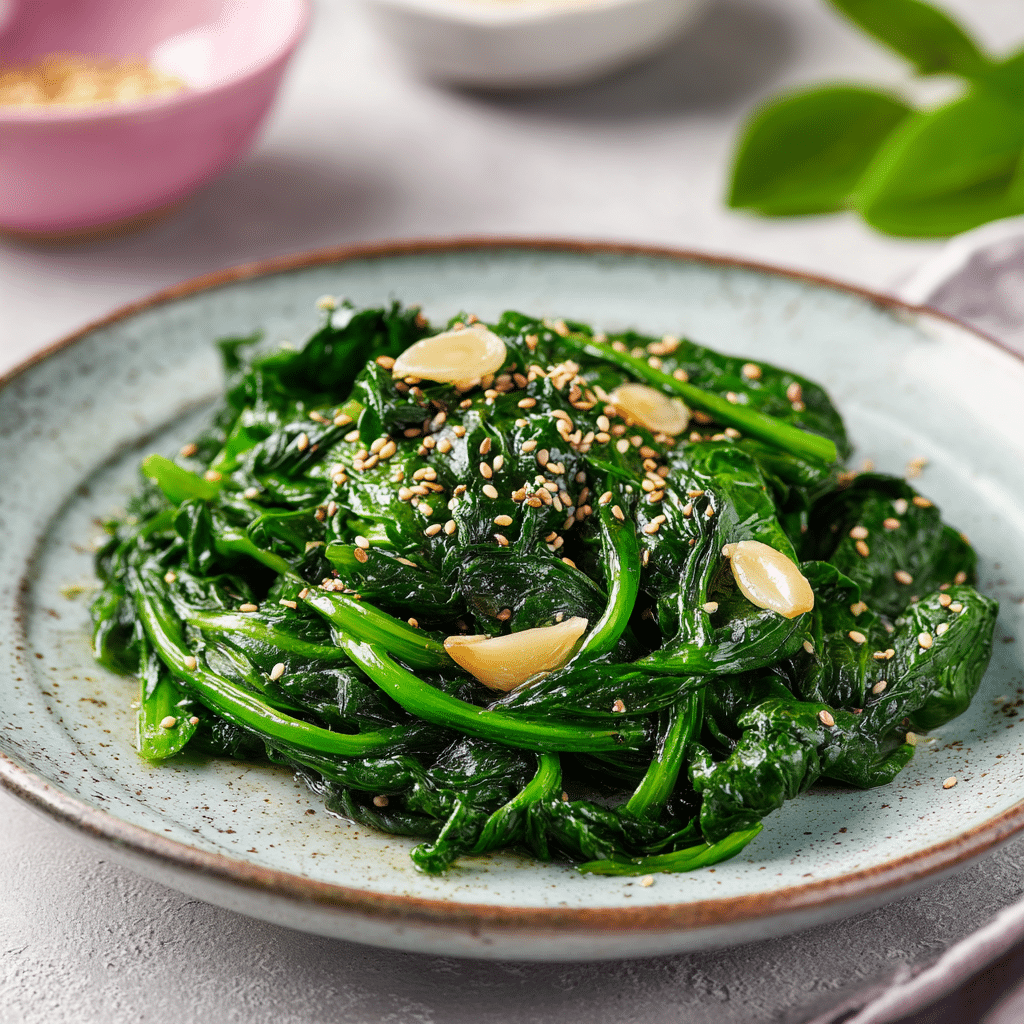
Korean Spinach Side Dish, known as Sigeumchi Namul (시금치나물), is one of the most beloved and recognizable banchan—small side dishes—in Korean cuisine. Light, garlicky, and bursting with umami flavor, it’s a simple recipe that offers a surprisingly deep taste with minimal ingredients. You’ll often see it served in Korean households, lunchboxes, and as a key component in bibimbap.
While it may appear humble, this dish embodies the essence of Korean culinary philosophy: letting the ingredients speak for themselves. Made with fresh blanched spinach, sesame oil, garlic, and soy sauce, Sigeumchi Namul is a celebration of balance—nutty, salty, slightly sweet, and deeply satisfying.
Let’s break down what makes this dish a staple, how to make it step-by-step, and why it deserves a spot on your table—whether you’re crafting a full Korean meal or just want something healthy and delicious on the side.
Ingredients Overview
Each ingredient in Korean Spinach Side Dish serves a specific purpose. Here’s a closer look at what you’ll need and why it matters:
Spinach
Fresh spinach is the heart of the dish. Korean cuisine often uses the soft, flat-leaf kind, but baby spinach or regular mature spinach work well too. The spinach is blanched briefly to retain its bright green color and soft texture without becoming mushy. This process also removes oxalic acid, which can give raw spinach a slightly bitter taste.
Garlic
Minced garlic gives this dish a kick of pungent aroma and flavor. Koreans love garlic, and its use here provides a bold contrast to the mellow greens. Just a small amount—usually one clove—is enough to bring depth.
Soy Sauce
This adds the essential saltiness and umami. Use regular soy sauce, or low-sodium if you prefer a lighter flavor. It also deepens the color slightly, giving the spinach a beautiful, glossy sheen.
Sesame Oil
This is where the magic happens. Toasted sesame oil coats each leaf with a rich nuttiness and binds all the other flavors together. It’s aromatic and unmistakably Korean.
Sesame Seeds
Toasted sesame seeds are sprinkled at the end for a bit of crunch and visual appeal. They also enhance the sesame flavor and provide a toasty finish.
Salt
Though soy sauce provides saltiness, a pinch of salt added to the blanching water helps season the spinach during cooking and keeps it vibrantly green.
Step-by-Step Instructions
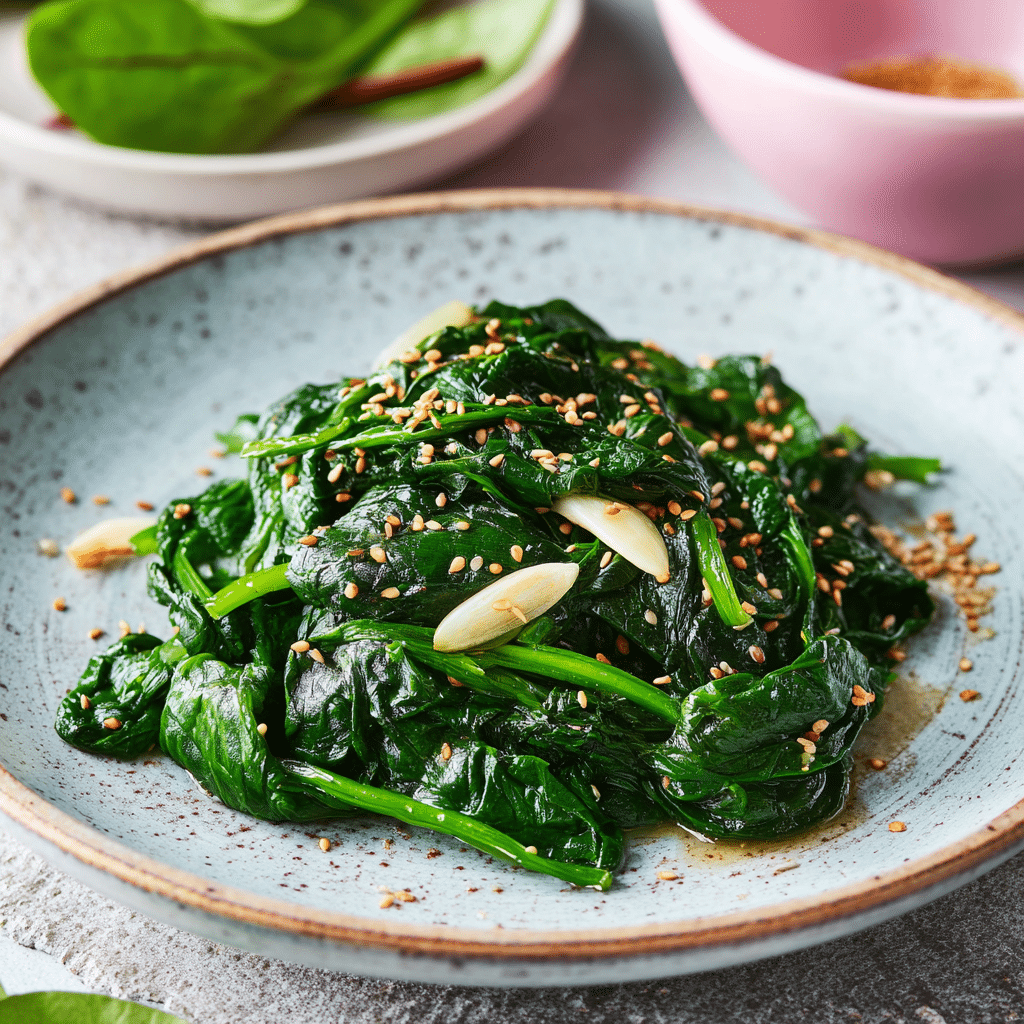
Making Sigeumchi Namul is incredibly simple, but a few key steps make a big difference in texture and flavor. Here’s how to get it just right.
1. Prepare and Clean the Spinach
Start with a bunch (about 10 oz or 300g) of fresh spinach. Rinse thoroughly under cold water to remove dirt, especially if using mature spinach. Trim off any tough stems if needed.
2. Blanch the Spinach
Bring a large pot of water to a boil and add a teaspoon of salt. This not only seasons the spinach but also helps retain its vibrant green color. Add the spinach and blanch for 30–45 seconds—just until wilted.
Immediately transfer the spinach to a bowl of ice water or rinse under very cold running water. This halts the cooking process and locks in color and texture.
3. Drain and Squeeze
Once cool, gently squeeze the spinach to remove excess moisture. You don’t want it dripping wet, but don’t wring it to the point of breaking the leaves. A firm press will do.
4. Season the Spinach
Place the drained spinach in a mixing bowl. Add:
-
1 minced garlic clove
-
1 tablespoon soy sauce
-
1 teaspoon toasted sesame oil
-
1 teaspoon toasted sesame seeds
Use clean hands or chopsticks to gently mix and toss everything together until evenly coated. Don’t over-mix; the spinach should still hold its shape.
5. Let It Rest
Letting the seasoned spinach sit for 10–15 minutes allows the flavors to meld. You can also refrigerate it for later—many say it tastes even better cold after the flavors have developed.
Tips, Variations, and Substitutions
Korean home cooking is wonderfully adaptable. Here are some ways to make this dish your own:
Tips for Success
-
Use fresh spinach: Avoid frozen spinach—it has too much moisture and lacks texture.
-
Don’t over-blanch: Overcooked spinach becomes soggy and dull. Keep it to under a minute.
-
Toast your sesame seeds: Even pre-toasted seeds benefit from a quick heat-up in a dry pan. This revives their aroma and crunch.
Variations
-
Add Gochugaru (Korean chili flakes): For a spicy kick, sprinkle a pinch of gochugaru into the mix.
-
Mix with bean sprouts: For extra crunch and flavor, add blanched soybean sprouts (kongnamul) to make a blended namul dish.
-
Include a dash of sugar: A tiny pinch can balance the salt and enhance the natural sweetness of the spinach.
Dietary Substitutions
-
Gluten-Free: Use tamari or gluten-free soy sauce.
-
Low Sodium: Replace soy sauce with coconut aminos or a low-sodium version.
-
Oil-Free: Omit sesame oil and add a splash of vegetable broth for moisture—but note, this will reduce flavor intensity.
Serving Ideas & Occasions
This Korean Spinach Side Dish is as versatile as it is tasty. Here’s how you can enjoy it:
Everyday Meals
-
Serve as part of a traditional Korean banchan spread with rice, kimchi, and grilled meats.
-
Pair with simple steamed rice and a fried egg for a quick, balanced lunch.
Special Occasions
-
Perfect for Korean holidays like Chuseok or Lunar New Year where a variety of vegetable namul is served.
-
Ideal for bibimbap bowls—lay the seasoned spinach atop rice with other veggies and gochujang.
Meal Prep Friendly
-
Make a batch and store in the fridge for up to 3 days. It’s a great grab-and-go veggie for lunchboxes or quick dinners.
Nutritional & Health Notes
Sigeumchi Namul isn’t just delicious—it’s good for you too. Here’s why:
Low-Calorie & Nutrient Dense
Spinach is incredibly low in calories but rich in vitamins A, C, and K, as well as folate, magnesium, and iron. One serving provides a strong hit of plant-based nutrition.
Heart-Healthy Fats
The sesame oil not only adds flavor but contains healthy monounsaturated and polyunsaturated fats.
Fiber-Rich
This side dish is high in fiber, promoting digestion and satiety without heaviness.
Protein Add-On Friendly
Though not high in protein on its own, it pairs perfectly with tofu, eggs, or grilled meats to round out a full meal.
FAQs About Korean Spinach Side Dish
1. Can I use frozen spinach for Sigeumchi Namul?
Technically yes, but it’s not recommended. Frozen spinach tends to be waterlogged and loses the fresh texture that makes this dish shine. If you must use it, thaw completely and squeeze out all excess water before seasoning.
2. How long can I store Korean spinach side dish?
It keeps well in the refrigerator for 2–3 days in an airtight container. Do not freeze—it will alter the texture significantly.
3. Is this dish traditionally eaten hot or cold?
Cold or room temperature is best. Letting it chill enhances the flavor and makes it a refreshing side to balance hot rice and spicy stews.
4. Can I make this dish ahead of time?
Absolutely. It’s an ideal make-ahead dish for meal prep or parties. Just give it a stir before serving to redistribute the seasoning.
5. What’s the difference between Sigeumchi Namul and spinach salad?
Sigeumchi Namul is lightly blanched and seasoned Korean-style. Western spinach salads are typically raw and dressed in vinaigrettes. Namul emphasizes umami and sesame-rich depth, not acidity.
6. Is Sigeumchi Namul vegan?
Yes, as long as you use vegan soy sauce or tamari. It contains no animal products.
7. Can I use other greens for this recipe?
Yes! This method works well with Swiss chard, beet greens, or even baby kale. Adjust blanching time based on the toughness of the green.