
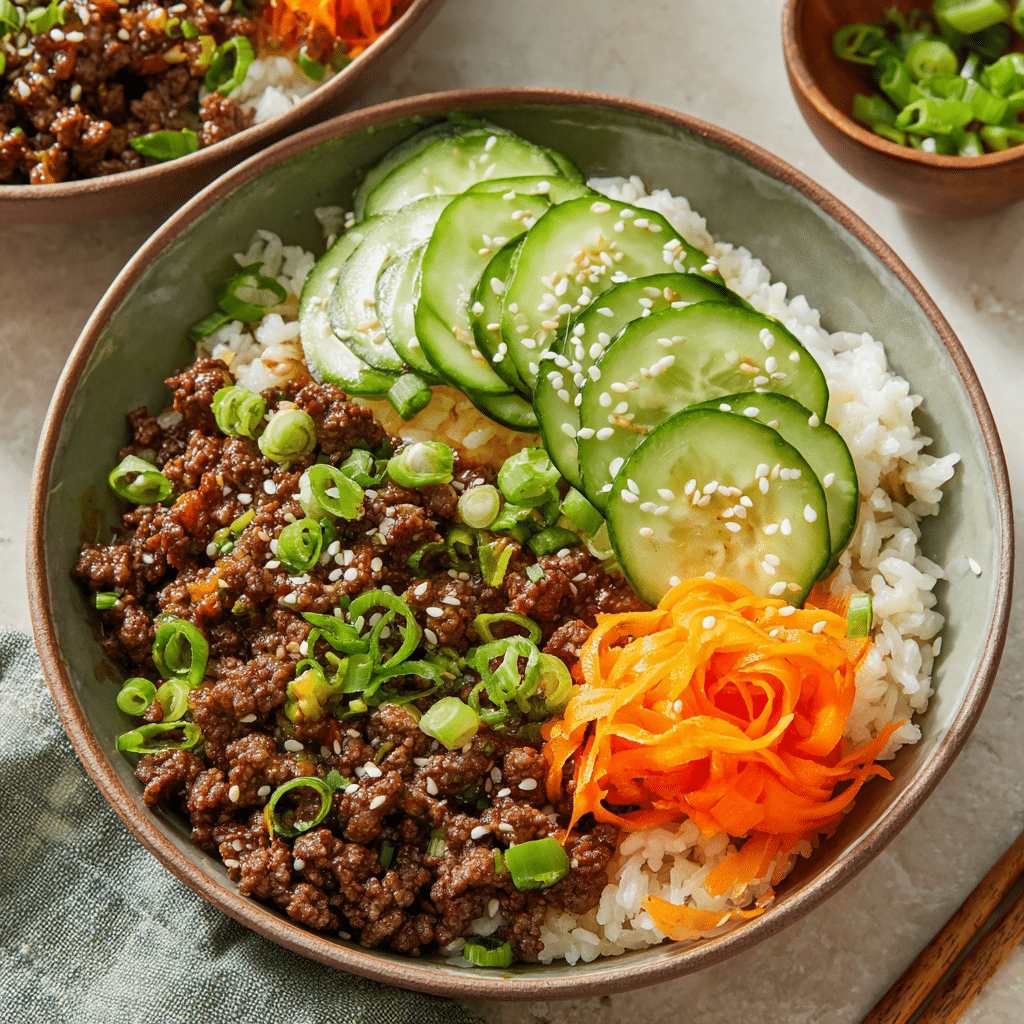
Bibimbap is one of Korea’s most iconic and beloved dishes—a vibrant rice bowl topped with a colorful array of vegetables, seasoned meat, a fried egg, and a spicy-sweet gochujang sauce. Traditionally served in a sizzling hot stone bowl, it’s a meal that’s as satisfying as it is beautiful. This Easy Bibimbap with Ground Beef version simplifies the classic without sacrificing flavor, making it a perfect weeknight meal that comes together in under 40 minutes.
With savory-sweet ground beef, quickly sautéed vegetables, and a punchy gochujang sauce drizzled over steaming hot rice, this bibimbap offers bold, balanced flavors in every bite. It’s a one-bowl wonder packed with texture, nutrition, and comfort—and it’s incredibly customizable.
Ingredients Overview
Bibimbap is a symphony of contrasts: warm and cool, spicy and sweet, crispy and soft. Here’s a closer look at what goes into a simplified ground beef version of this Korean favorite.
Ground Beef
A time-saving swap for the traditional bulgogi. Ground beef cooks quickly and absorbs seasoning easily. Use lean ground beef (80–90% lean) to keep the bowl rich but not greasy.
Season the beef with:
-
Soy Sauce: Adds umami and saltiness.
-
Sesame Oil: Nutty aroma and depth.
-
Garlic: Pungent and savory.
-
Brown Sugar: Balances salt and spice with a hint of sweetness.
-
Ginger (optional): Fresh and aromatic.
Cooked White Rice
Short-grain white rice (like sushi rice or Korean rice) is ideal for its sticky texture, which helps hold everything together. Freshly steamed rice is preferred, but day-old rice can be revived by reheating with a splash of water.
Vegetables (Assorted, Colorful, and Lightly Cooked)
Traditional bibimbap includes a variety of julienned or sliced vegetables. For ease and accessibility, choose:
-
Carrots: Julienned and lightly sautéed or raw for crunch.
-
Zucchini: Sautéed briefly to soften and concentrate flavor.
-
Spinach: Blanched and seasoned with sesame oil and garlic.
-
Mushrooms (shiitake or cremini): Pan-sautéed for umami.
-
Bean Sprouts (optional): Quickly blanched for texture.
These vegetables add not only nutrients but visual appeal through color contrast.
Fried Egg
A sunny-side-up egg adds richness. The runny yolk mixes with the rice and sauce to create a luscious texture. For a crispier version, fry until edges are golden.
Gochujang Sauce
A spicy-sweet fermented chili paste that defines the flavor of bibimbap. The sauce is usually thinned and sweetened:
-
Gochujang: Base flavor.
-
Sesame Oil: Aroma and fat.
-
Soy Sauce: Salty balance.
-
Rice Vinegar: Adds brightness.
-
Sugar or Honey: For sweetness.
-
Water: To thin it to drizzling consistency.
Sesame Seeds & Scallions
Toasted sesame seeds and thinly sliced scallions finish the bowl with crunch and a touch of earthiness.
Step-by-Step Instructions
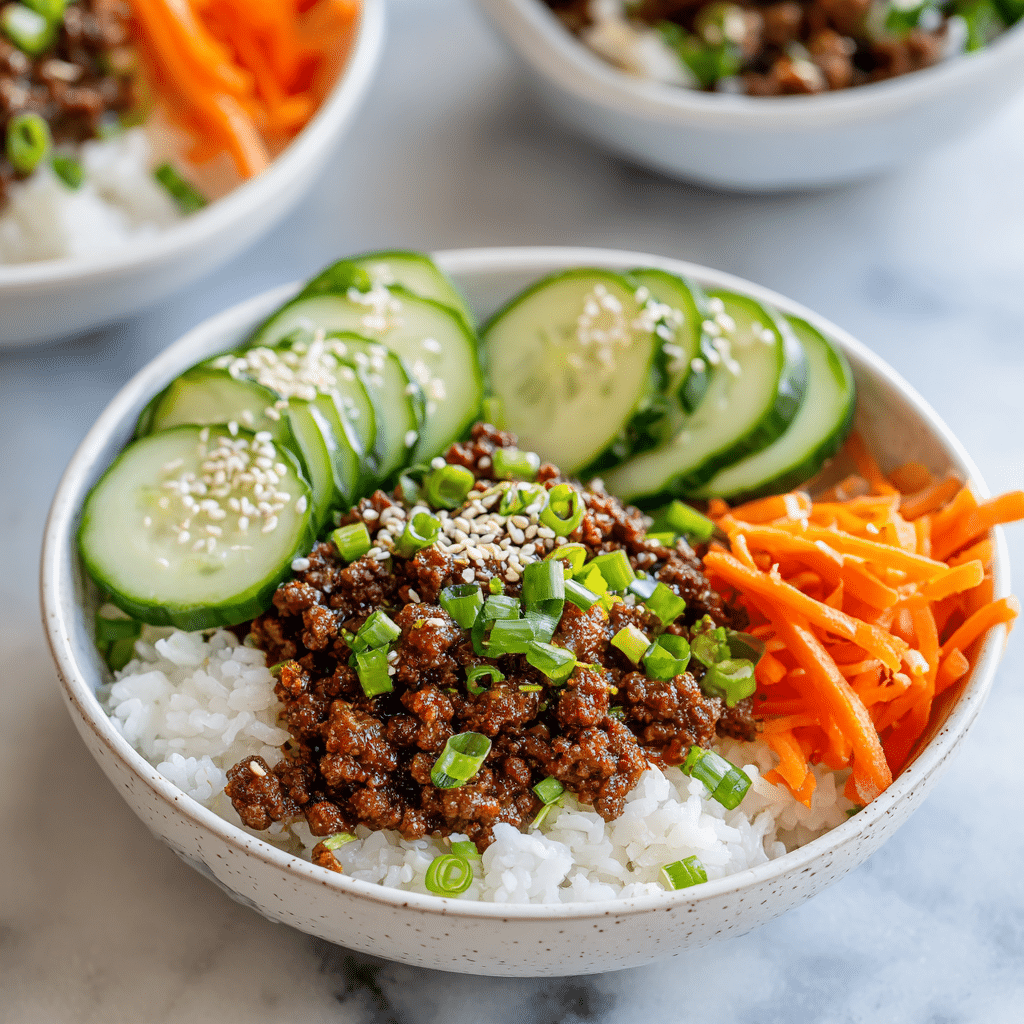
Creating bibimbap may seem like an elaborate affair, but this easy version uses practical shortcuts while staying true to the spirit of the dish.
1. Cook the Rice
Start by cooking your rice. Use a rice cooker or stovetop method for short-grain white rice. Keep it warm while preparing other components.
2. Sauté the Ground Beef
-
Heat a skillet over medium-high heat.
-
Add the ground beef and cook until browned, breaking it up with a spatula.
-
Drain excess fat if needed.
-
Add soy sauce, sesame oil, garlic, and brown sugar.
-
Cook until the beef is well coated and slightly caramelized, about 3–4 minutes.
Set aside and keep warm.
3. Prepare the Vegetables
You can sauté each vegetable separately or in quick succession using the same pan:
-
Carrots: Sauté with a touch of sesame oil and salt until tender.
-
Zucchini: Cook briefly until just soft and slightly golden.
-
Spinach: Blanch for 30 seconds, drain, and season with a little garlic and sesame oil.
-
Mushrooms: Sauté with soy sauce until browned and juicy.
-
Bean Sprouts (optional): Blanch and season lightly.
Keep each veggie separate for traditional presentation.
4. Make the Gochujang Sauce
In a small bowl, whisk together:
-
2 tablespoons gochujang
-
1 tablespoon sesame oil
-
1 tablespoon soy sauce
-
1 tablespoon sugar or honey
-
1 teaspoon rice vinegar
-
1–2 tablespoons water (adjust for consistency)
Taste and adjust heat or sweetness to your liking.
5. Fry the Eggs
In a small nonstick skillet, fry eggs sunny-side-up or over-easy. You want the yolk to remain runny for mixing.
6. Assemble the Bowl
-
Scoop a generous portion of hot rice into a wide bowl.
-
Arrange the beef and each vegetable in neat piles on top.
-
Add the fried egg in the center.
-
Drizzle gochujang sauce over the top.
-
Sprinkle with sesame seeds and scallions.
Let each diner mix their own bowl before eating.
Tips, Variations, and Substitutions
Pro Tips
-
Use Prepped Veggies: Store-bought shredded carrots, spinach, and sliced mushrooms cut down on prep time.
-
Prep Ahead: Make the veggies and sauce in advance. Reheat the beef and assemble when ready.
-
Presentation Matters: Neat, colorful arrangement makes the bowl more appealing and true to tradition.
Variations
-
Spicy Bibimbap: Add extra gochujang or fresh chili slices.
-
Vegetarian: Replace beef with sautéed tofu or tempeh. Marinate in soy sauce, garlic, and sesame oil.
-
Korean Bulgogi-Style Beef: Use sliced ribeye or sirloin marinated overnight for a more authentic flavor.
-
Bibimbap with Kimchi: Add chopped kimchi as a topping for a tangy, fermented kick.
Ingredient Swaps
-
No Gochujang? Use a mix of sriracha and hoisin in a pinch.
-
Gluten-Free: Use tamari instead of soy sauce and verify that your gochujang is gluten-free.
-
No Rice? Serve over cauliflower rice or shredded cabbage for a low-carb version.
Serving Ideas & Occasions
Bibimbap is incredibly versatile and fits any mealtime:
-
Weeknight Dinner: Fast, filling, and adaptable.
-
Lunch Meal Prep: Pack components separately and reheat.
-
DIY Bibimbap Night: Set out toppings buffet-style and let everyone build their own bowl.
-
Comfort Food Fix: Warm rice, savory meat, and spicy sauce = cozy satisfaction.
Serve with a side of miso soup, kimchi, or pickled cucumbers for a complete Korean-inspired meal.
Nutritional & Health Notes
Bibimbap is a balanced, nutrient-dense meal:
-
Protein: Ground beef and egg offer high-quality protein.
-
Vegetables: A rainbow of veggies means diverse vitamins and fiber.
-
Healthy Fats: Sesame oil and egg yolk provide essential fats.
-
Customizable Carbs: Use less rice or swap in whole grains if watching carbs.
To lighten the dish:
-
Use lean ground meat or tofu.
-
Reduce oil and sugar in the beef and sauce.
-
Load up on extra veggies.
Bibimbap is naturally portion-controlled when served in individual bowls, which helps with mindful eating.
FAQ
1. Can I make bibimbap without gochujang?
Yes, although gochujang gives bibimbap its signature flavor. For a quick substitute, mix sriracha with a bit of honey and soy sauce. It won’t be the same, but it gives a similar sweet-spicy effect.
2. What’s the best type of rice for bibimbap?
Short-grain white rice is ideal for its stickiness and texture. You can use jasmine or medium-grain rice in a pinch. Brown rice or quinoa works for a whole-grain variation.
3. Can I meal prep bibimbap for the week?
Absolutely. Cook the beef, rice, and vegetables in advance and store them separately in airtight containers. Reheat and top with a fresh egg and sauce before serving.
4. Is bibimbap spicy?
It can be, depending on how much gochujang sauce you add. You can control the spice level by adjusting the amount of gochujang or thinning it with more sesame oil and water.
5. Can I use chicken or pork instead of beef?
Yes. Ground chicken or pork can be seasoned the same way as beef. Just make sure to cook thoroughly and adjust seasoning as needed.
6. What does ‘bibimbap’ mean?
“Bibimbap” literally means “mixed rice” in Korean. It refers to the act of mixing all the toppings, rice, and sauce together before eating.
7. Can I serve bibimbap without the egg?
Yes. While the egg adds richness and traditional flair, you can skip it or use a soft-boiled egg if preferred. For a vegan version, omit the egg and use plant-based protein.