
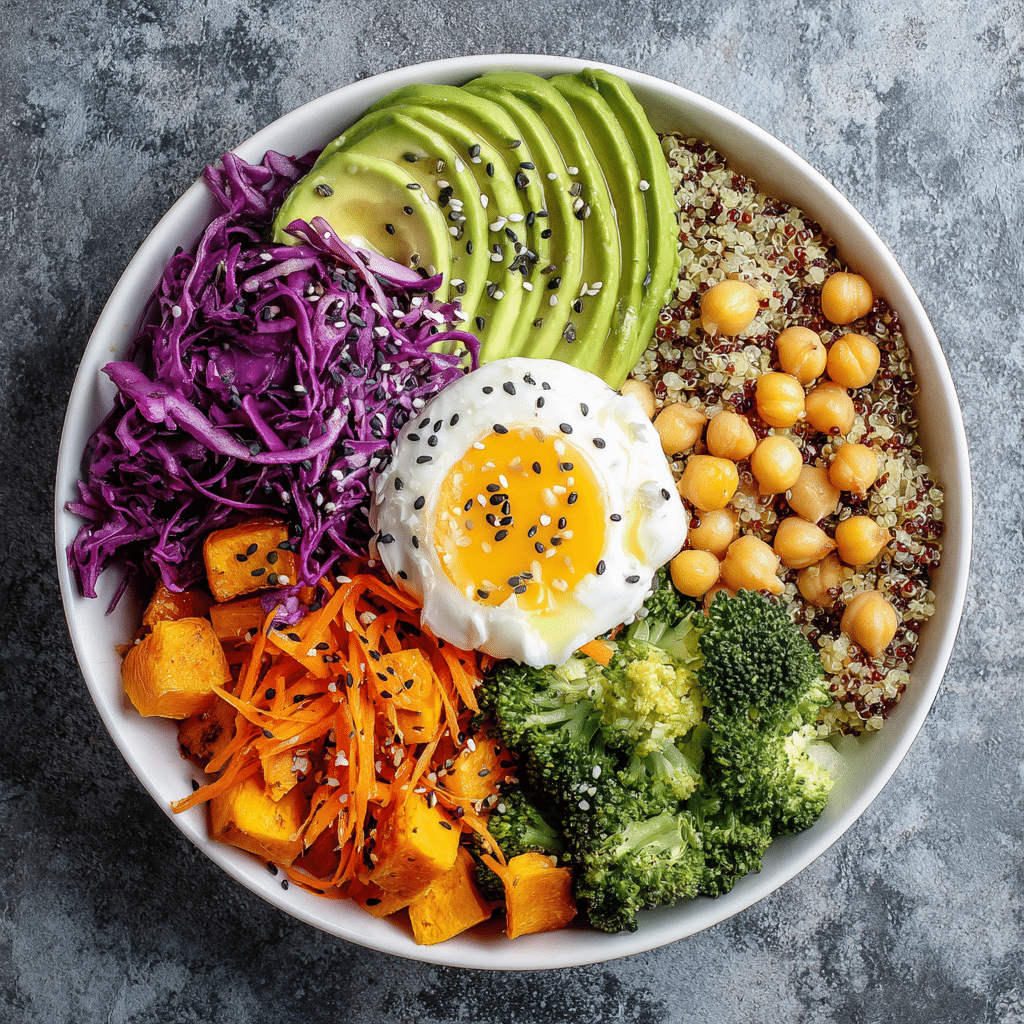
Buddha Bowls are a vibrant celebration of whole, nourishing ingredients — a complete meal tucked into one bowl. Thoughtfully layered with grains, crisp vegetables, plant-based proteins, and drizzled with a creamy sauce, Buddha Bowls are as beautiful as they are satisfying.
The term “Buddha Bowl” refers to the generous, rounded belly of the bowl, filled to the brim like the belly of Buddha. These bowls are rooted in balance — a combination of textures, colors, and nutrients that feel both indulgent and wholesome.
Whether you’re vegan, vegetarian, gluten-free, or just looking for a fresh weeknight dinner idea, a Buddha Bowl is endlessly adaptable and always delicious. With their mix of roasted and raw elements, crunchy toppings, and savory sauces, they hit all the right flavor notes: salty, sweet, tangy, and umami.
Ingredients Overview
The beauty of a Buddha Bowl lies in its flexibility, but here’s a breakdown of the core components that bring harmony and satisfaction to each bite.
1. Grains (The Base)
Whole grains provide a hearty foundation. Use one of the following:
-
Quinoa: High in protein, nutty, and fluffy.
-
Brown rice: Earthy and chewy — ideal for soaking up dressings.
-
Farro: A toasty, firm ancient grain with great texture.
-
Gluten-free option: Try wild rice or millet.
2. Proteins (Plant-Based)
These add staying power and savory depth:
-
Chickpeas: Roasted or pan-seared with spices.
-
Tofu: Baked or pan-fried until golden.
-
Tempeh: Marinated and grilled for a nutty bite.
-
Edamame: Quick, protein-packed and slightly sweet.
3. Vegetables (Raw & Roasted)
Texture contrast is key:
-
Roasted: Sweet potatoes, cauliflower, beets, or carrots.
-
Raw: Shredded red cabbage, cucumber ribbons, cherry tomatoes, baby spinach, arugula, or radishes.
-
Tip: Roast veggies with olive oil, salt, and smoked paprika or cumin for extra warmth.
4. Toppings (Crunch & Creamy)
Finish with flavorful accents:
-
Avocado: Adds creaminess and healthy fats.
-
Pumpkin or sunflower seeds: For crunch and extra minerals.
-
Pickled onions or kimchi: Brings acidity and zing.
-
Microgreens or cilantro: Fresh herbal lift.
5. Sauce (The Tie-Together)
No Buddha Bowl is complete without a bold sauce:
-
Tahini dressing: Nutty, creamy, and lemony.
-
Peanut sauce: A Thai-inspired favorite with lime, soy, and garlic.
-
Green goddess: Avocado, herbs, and yogurt blend.
-
Miso-ginger: Salty-sweet with umami-rich notes.
Step-by-Step Instructions
1. Cook the Grains
Rinse your chosen grain thoroughly. For quinoa, use a 2:1 water-to-quinoa ratio. Bring to a boil, reduce heat, cover, and simmer for 15 minutes until fluffy. For brown rice, follow a 2.5:1 water-to-rice ratio, cooking for 35–45 minutes until tender.
Let grains cool slightly before assembling the bowl. Warm or room temperature works best for contrast.
2. Prepare the Vegetables
Chop your roasting veggies into bite-size pieces. Toss in olive oil, salt, and spices (paprika, turmeric, garlic powder). Roast at 400°F (200°C) for 25–30 minutes, flipping halfway for even browning.
Meanwhile, slice raw veggies thinly. A mandoline helps with cucumbers and radishes, while a sharp knife is perfect for cabbage and greens.
3. Cook the Protein
If using chickpeas, pat them dry and roast with olive oil, smoked paprika, and cumin at 400°F for 25 minutes until crispy.
For tofu: press out moisture, cube, and toss in soy sauce, garlic, and cornstarch. Bake or pan-fry until crisp and golden.
Tempeh benefits from a quick marinade (soy sauce, maple syrup, vinegar), then seared or baked.
4. Blend the Sauce
Whisk or blend ingredients until smooth. For tahini dressing: mix ¼ cup tahini, 2 tbsp lemon juice, 1 tbsp maple syrup, 1 garlic clove (minced), salt, and 2–4 tbsp water to reach desired consistency.
Taste and adjust: more lemon for brightness, maple for sweetness, or salt for punch.
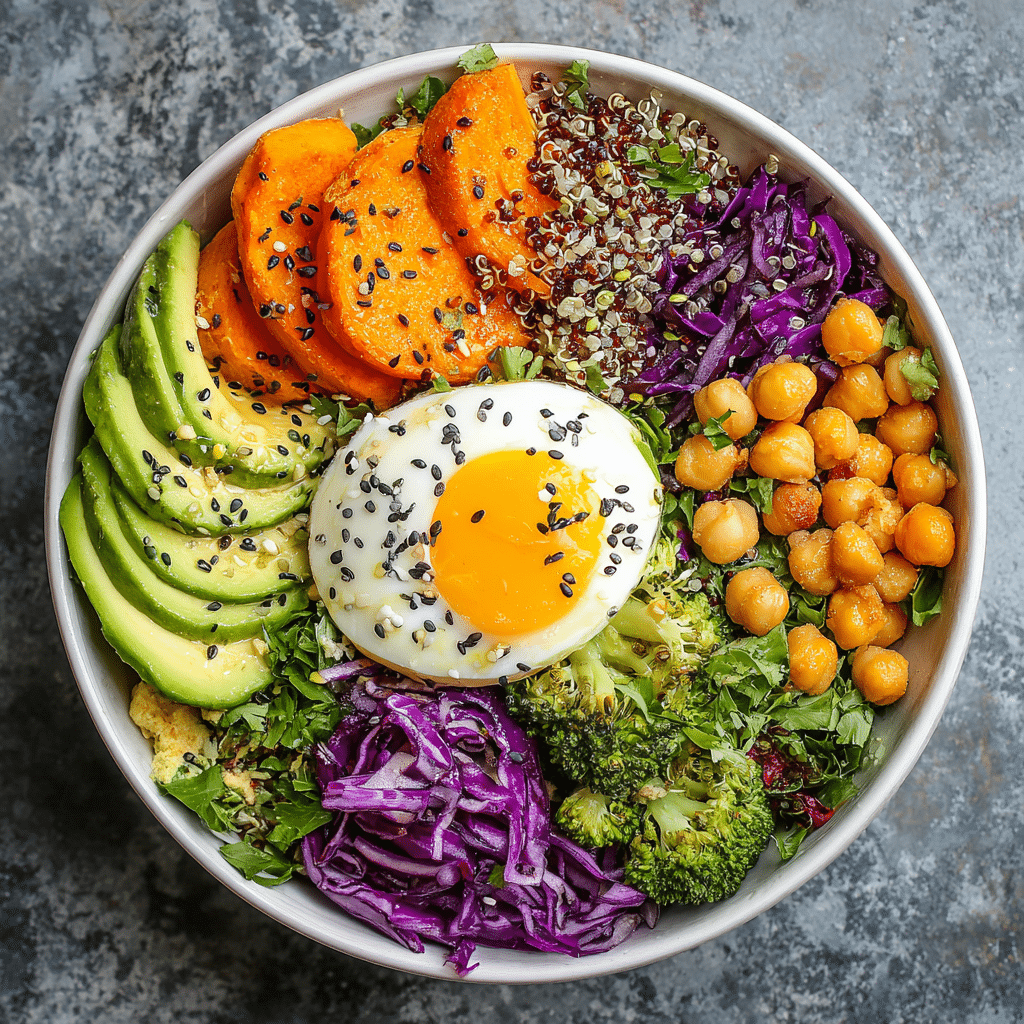
5. Assemble the Bowl
Layer each component with intention:
-
Start with a scoop of grain.
-
Add a handful of raw greens and vibrant vegetables.
-
Pile on warm roasted veggies.
-
Nestle protein into one quadrant.
-
Add creamy avocado and sprinkle with seeds.
-
Drizzle generously with sauce.
The bowl should feel balanced in color, shape, and height — visual appeal enhances the eating experience.
Tips, Variations & Substitutions
Tips for Success
-
Meal prep: Roast veggies, cook grains, and make sauce ahead for quick assembly during the week.
-
Texture balance: Always include something crunchy, something soft, and something creamy.
-
Color rule: Try to include at least three different colors — more visual interest, and often, more nutrients.
Regional Variations
-
Mexican-Inspired: Use black beans, roasted corn, avocado, and chipotle-lime dressing.
-
Mediterranean: Try farro, hummus, cucumber, olives, and lemon-tahini sauce.
-
Asian-Inspired: Rice, edamame, pickled carrot, sesame tofu, and ginger-soy dressing.
Dietary Substitutions
-
Gluten-Free: Use certified GF grains like rice or quinoa.
-
Low-Carb: Replace grains with cauliflower rice or zucchini noodles.
-
Nut-Free: Choose tahini or sunflower seed butter over peanut-based sauces.
-
Vegan: Naturally vegan, just double-check sauce ingredients (some green goddess versions contain yogurt).
Serving Ideas & Occasions
Buddha Bowls are a feast for any occasion. Serve them:
-
For lunch: A portable, energizing midday meal.
-
At dinner parties: Let guests build their own for a fun, customizable experience.
-
During meal prep: Store components separately and assemble fresh.
-
On a cozy night in: Comforting and wholesome, especially with warm roasted vegetables and creamy sauce.
Pair with sparkling water, herbal iced tea, or miso soup for a nourishing combo.
Nutritional & Health Notes
Buddha Bowls are rich in fiber, plant-based protein, and healthy fats. The combination of whole grains and legumes creates a complete protein source, essential for plant-based diets.
Leafy greens, colorful vegetables, and seeds provide a variety of vitamins, minerals, and antioxidants. Avocados add potassium and heart-healthy monounsaturated fats.
Portion control is easy — use smaller bowls for lighter meals or scale up for dinner. They’re naturally anti-inflammatory, low in refined sugar, and high in satiety — making them an excellent choice for clean eating, weight management, or balanced nourishment.
FAQs
Q1: What’s the difference between a Buddha Bowl and a grain bowl?
A Buddha Bowl usually emphasizes plant-based ingredients, raw and roasted vegetables, and colorful presentation. While a grain bowl can include meat or dairy, Buddha Bowls traditionally lean toward wholesome, vegan-friendly fare with a focus on balance and mindfulness.
Q2: Can I make Buddha Bowls ahead of time?
Yes! Prep grains, roast vegetables, and make your sauce in advance. Store components separately in airtight containers. When ready to eat, reheat warm ingredients and assemble fresh with raw veggies and toppings.
Q3: What sauces go well with Buddha Bowls?
Tahini lemon dressing, peanut-lime sauce, miso-ginger vinaigrette, and avocado herb dressing all work beautifully. A good sauce should be bold enough to tie together all the components without overpowering them.
Q4: Can Buddha Bowls be high in protein?
Absolutely. Add roasted chickpeas, lentils, tofu, tempeh, or edamame for a protein boost. Pair with quinoa, which also contains all nine essential amino acids. Seeds and nuts like pumpkin or almonds offer additional plant protein.
Q5: How can I keep the vegetables fresh?
Store raw and roasted veggies separately. Use airtight containers and line with paper towels to absorb moisture. Only slice avocado and add dressing right before serving to avoid sogginess and browning.
Q6: Are Buddha Bowls suitable for kids?
Yes, especially if you make it interactive! Let kids choose their ingredients and help assemble their own bowls. Use mild dressings and familiar veggies, like sweet potatoes, cucumbers, and carrots.
Q7: Do I need special equipment to make a Buddha Bowl?
No special tools are required. A sheet pan for roasting, a pot for grains, and a good knife will get the job done. A blender is helpful for creamy sauces, but whisking by hand works too.