
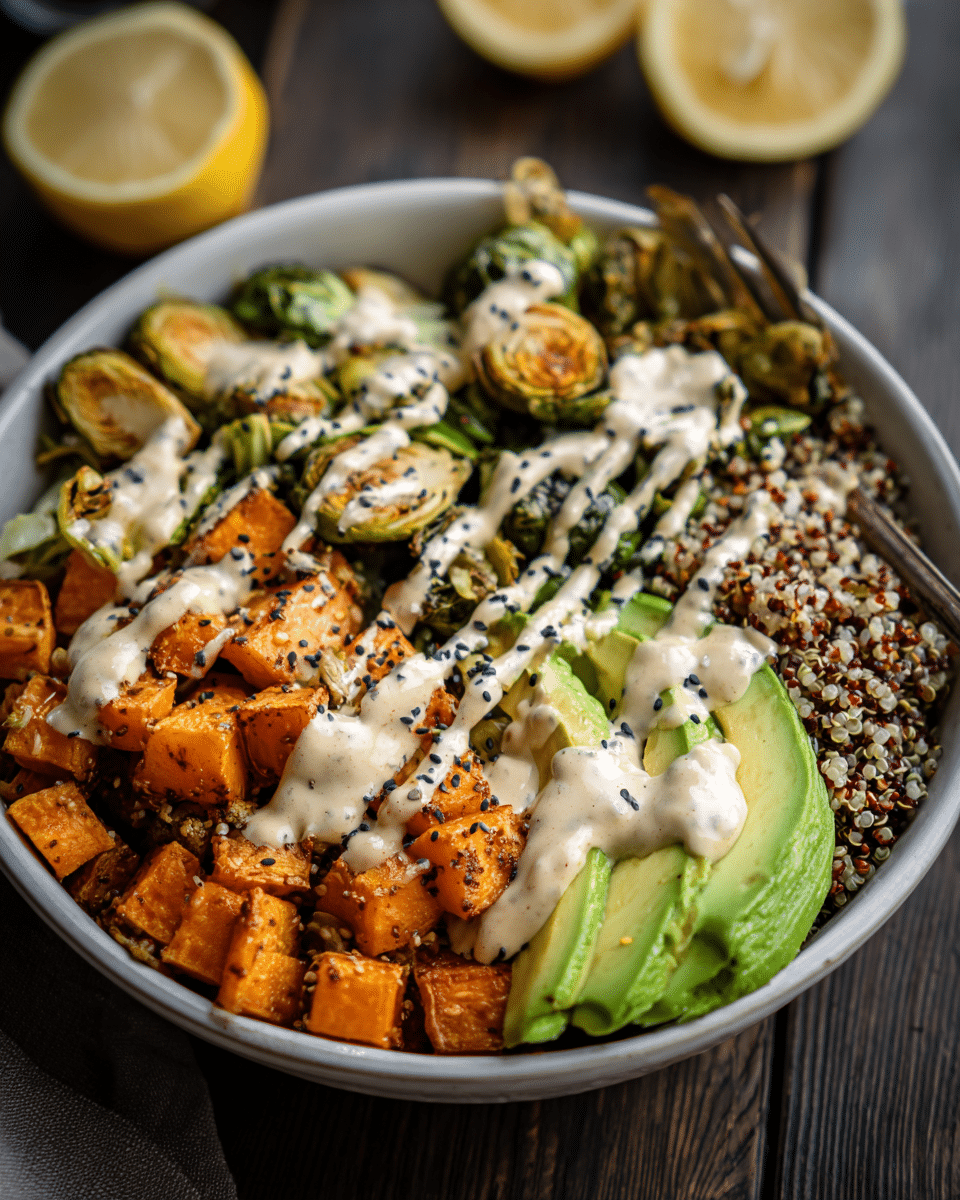
The Roasted Veggie Buddha Bowl is a vibrant, wholesome dish that brings together a medley of roasted vegetables, hearty grains, and creamy dressings in one beautifully layered bowl. Rooted in Buddhist vegetarian tradition, Buddha bowls have grown in popularity across the globe for their nutrient-packed simplicity and balanced flavor profiles.
This dish is not only satisfying and rich in textures, but also endlessly customizable. The golden roasted vegetables offer caramelized sweetness and slight crispiness, while grains like quinoa or brown rice provide a chewy base. Topped with a drizzle of tahini, lemon, or herbed yogurt sauce, each bite becomes a celebration of whole-food goodness.
Whether you’re looking for a cozy weeknight dinner, a refreshing lunch prep idea, or a meatless option that doesn’t skimp on satisfaction, the roasted veggie Buddha bowl has you covered.
Ingredients Overview
The beauty of a Buddha bowl lies in its components: each adds its own taste, texture, and nutrition. Here’s a closer look at the ingredients that bring this bowl to life:
-
Sweet Potatoes: Naturally sweet with a creamy interior when roasted. They’re rich in fiber, Vitamin A, and add vibrant orange color.
-
Broccoli: Roasted broccoli brings crisp edges and a slight bitterness that balances the bowl. Choose fresh over frozen for better texture.
-
Red Bell Peppers: Sweet and slightly smoky when roasted. They also add a pop of red and are high in Vitamin C.
-
Chickpeas (Garbanzo Beans): Roasted until crispy, they add protein and crunch. You can use canned (rinsed and dried) or cook from dried for deeper flavor.
-
Zucchini or Yellow Squash: Mild and juicy, these soften beautifully in the oven and balance denser vegetables.
-
Red Onion: Roasting mellows their sharpness and gives them a sweet-savory edge.
-
Quinoa or Brown Rice: Both are hearty grain options. Quinoa is higher in protein and cooks quickly, while brown rice offers a chewier bite.
-
Avocado: Adds creamy richness and healthy fats. Use ripe but firm avocados to keep slices intact.
-
Tahini Dressing: Made from sesame seeds, it’s nutty, smooth, and tangy with lemon and garlic.
Ingredient Substitutions:
-
Swap quinoa for couscous, farro, or wild rice.
-
Use cauliflower, green beans, or Brussels sprouts instead of broccoli or peppers.
-
For a lower-carb version, use cauliflower rice or chopped spinach as the base.
-
Vegan? Stick with a lemon-tahini or balsamic vinaigrette dressing.
-
Gluten-free? Ensure grains and dressings are certified gluten-free.
Step-by-Step Instructions
1. Prepare the Vegetables
Wash, peel, and chop your vegetables into similar-sized pieces for even roasting. Toss them in olive oil, salt, and pepper. Spread them on separate parchment-lined trays to avoid overcrowding.
-
Sweet potatoes and chickpeas go in first as they take longer (25–30 minutes at 400°F).
-
Add broccoli, peppers, and onions halfway through for even texture.
You’ll smell the caramelizing sugars and savory notes as they roast—use this as your cue!
2. Cook the Grain Base
While the veggies roast, cook quinoa or brown rice according to package instructions. For extra flavor, cook in low-sodium vegetable broth and add a bay leaf or smashed garlic clove to the pot.
-
Quinoa takes about 15 minutes.
-
Brown rice needs 35–45 minutes depending on the type.
Once cooked, fluff with a fork and season with a pinch of salt and olive oil.
3. Make the Dressing
A basic tahini dressing includes:
-
1/3 cup tahini
-
2 tablespoons lemon juice
-
1 tablespoon maple syrup
-
1 small garlic clove, minced
-
2–4 tablespoons warm water to thin
Whisk until creamy and pourable. Adjust seasoning with salt and a pinch of cumin or paprika.
4. Assemble the Buddha Bowl
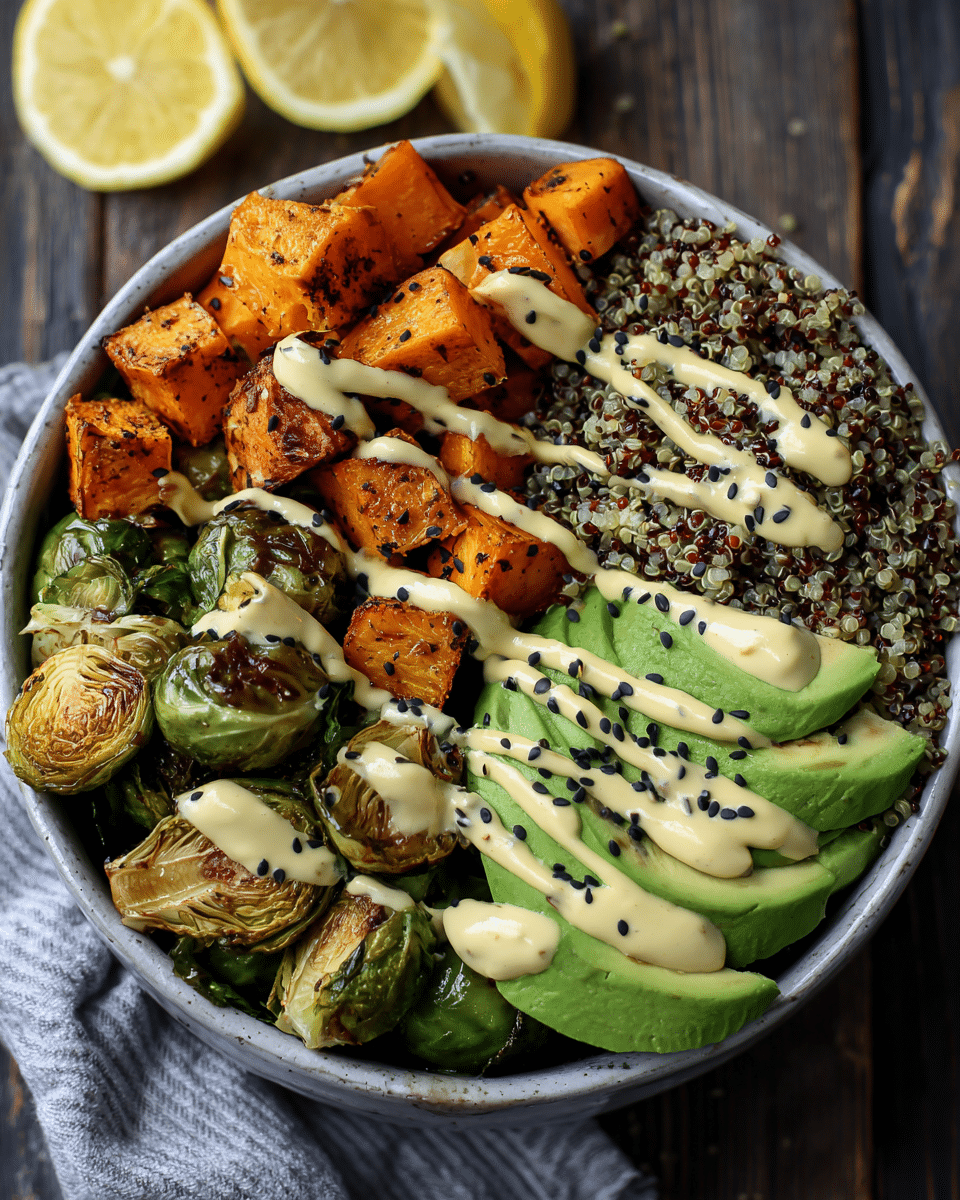
Layer each bowl starting with the grain. Arrange the roasted vegetables in sections like a colorful wheel. Add avocado slices and a handful of fresh greens or microgreens.
Drizzle generously with tahini dressing and sprinkle with sesame seeds or pumpkin seeds for texture.
Pro Tip:
Roast chickpeas separately on a dry tray for maximum crunch. Avoid overcrowding the pan to keep everything crisp, not steamed.
Tips, Variations & Substitutions
-
Meal Prep Friendly: Roast extra veggies and store in containers for quick weekday lunches.
-
Different Sauces: Swap tahini for green goddess, miso-ginger, or harissa yogurt dressing.
-
Add a Protein Boost: Marinated tofu, boiled eggs, or grilled tempeh work well if you need more protein.
-
Seasonal Twists: In fall, try roasted beets, squash, and cranberries. In summer, go light with cucumbers, corn, and cherry tomatoes (raw or lightly grilled).
-
Spice Lovers: Toss veggies in smoked paprika, chili powder, or za’atar before roasting.
-
Kid-Friendly Version: Use milder veggies (carrots, peas), swap dressing for hummus or ranch, and let kids build their own bowl.
Serving Ideas & Occasions
Roasted veggie Buddha bowls shine during:
-
Weeknight dinners when you want something healthy and filling.
-
Lunch meal prep, as everything stores beautifully in separate containers.
-
Meatless Mondays with friends or family.
-
Brunch with a twist: Add a poached egg or a swirl of Greek yogurt.
-
Holiday side dish: Serve as a warm grain salad alongside roasted meats or as a vegetarian main.
Pair with a sparkling water and citrus slice for a refreshing touch, or a warming herbal tea for cozy evenings.
Nutritional & Health Notes
This bowl is a powerhouse of plant-based nutrition. Rich in fiber, antioxidants, healthy fats, and complex carbs, it supports digestive health and stable energy throughout the day.
-
Chickpeas and quinoa provide plant-based protein and keep you full longer.
-
Sweet potatoes and peppers offer Vitamin A and C, key for immune support.
-
Healthy fats from tahini and avocado promote brain and heart health.
For a lighter option, go easy on the grains or use more greens. The dressing can be thinned or portioned for reduced calories without losing flavor.
FAQs
Q1: Can I eat a Buddha bowl cold?
A1: Absolutely. Buddha bowls taste delicious cold, making them perfect for meal prep. Just store dressing separately and drizzle before serving for freshness.
Q2: What’s the best grain for a Buddha bowl?
A2: Quinoa is ideal for its quick cooking time and protein content. Brown rice and farro are heartier options. Choose based on taste, nutrition, or what you have on hand.
Q3: How do I store leftovers?
A3: Store components separately in airtight containers for up to 4 days. Keep avocado and dressing fresh by adding just before serving.
Q4: Can I roast all vegetables at once?
A4: You can, but for best texture, stagger the cook times. Start with denser vegetables like sweet potatoes, then add quicker-cooking ones like zucchini or broccoli halfway through.
Q5: Is tahini dressing healthy?
A5: Yes! Tahini is made from sesame seeds and is rich in healthy fats, calcium, and iron. Combined with lemon juice and garlic, it becomes both flavorful and nutrient-dense.
Q6: Can I make this oil-free?
A6: You can roast veggies without oil by using parchment and higher heat, but they won’t caramelize as deeply. Use a splash of low-sodium broth for added moisture if needed.
Q7: What makes a Buddha bowl different from a salad?
A7: While both feature veggies, Buddha bowls are heartier, often warm, and include a grain base plus protein and dressing. The key is balance in flavor and nutrition
Roasted Veggie Buddha Bowl – A Nourishing, Colorful Meal in One Bowl
A nourishing, colorful Buddha bowl featuring roasted vegetables, hearty grains, and creamy tahini dressing.
Ingredients
-
1 medium sweet potato, peeled and cubed
-
1 cup broccoli florets
-
1 red bell pepper, sliced
-
1 zucchini, sliced
-
1 small red onion, sliced
-
1 can chickpeas, rinsed and dried
-
2 tablespoons olive oil
-
Salt and pepper, to taste
-
1 cup cooked quinoa or brown rice
-
1 ripe avocado, sliced
-
Handful of greens or microgreens
Tahini Dressing:
-
1/3 cup tahini
-
2 tablespoons lemon juice
-
1 tablespoon maple syrup
-
1 small garlic clove, minced
-
2–4 tablespoons warm water
-
Salt to taste
Instructions
-
Preheat oven to 400°F. Line two baking trays with parchment.
-
Toss sweet potato and chickpeas with 1 tbsp olive oil, salt, and pepper. Spread on one tray.
-
Roast for 15 minutes, then add broccoli, peppers, zucchini, and onion (tossed in remaining oil). Roast 15 more minutes.
-
Cook quinoa or brown rice if not already done.
-
Mix tahini, lemon juice, maple syrup, garlic, and water in a bowl until creamy. Season to taste.
-
Assemble bowls: base of grains, sections of roasted veggies, sliced avocado, greens. Drizzle with dressing.
Notes
-
Add tofu, egg, or tempeh for protein.
-
Use seasonal vegetables for variation.
-
Store dressing and avocado separately for meal prep.