
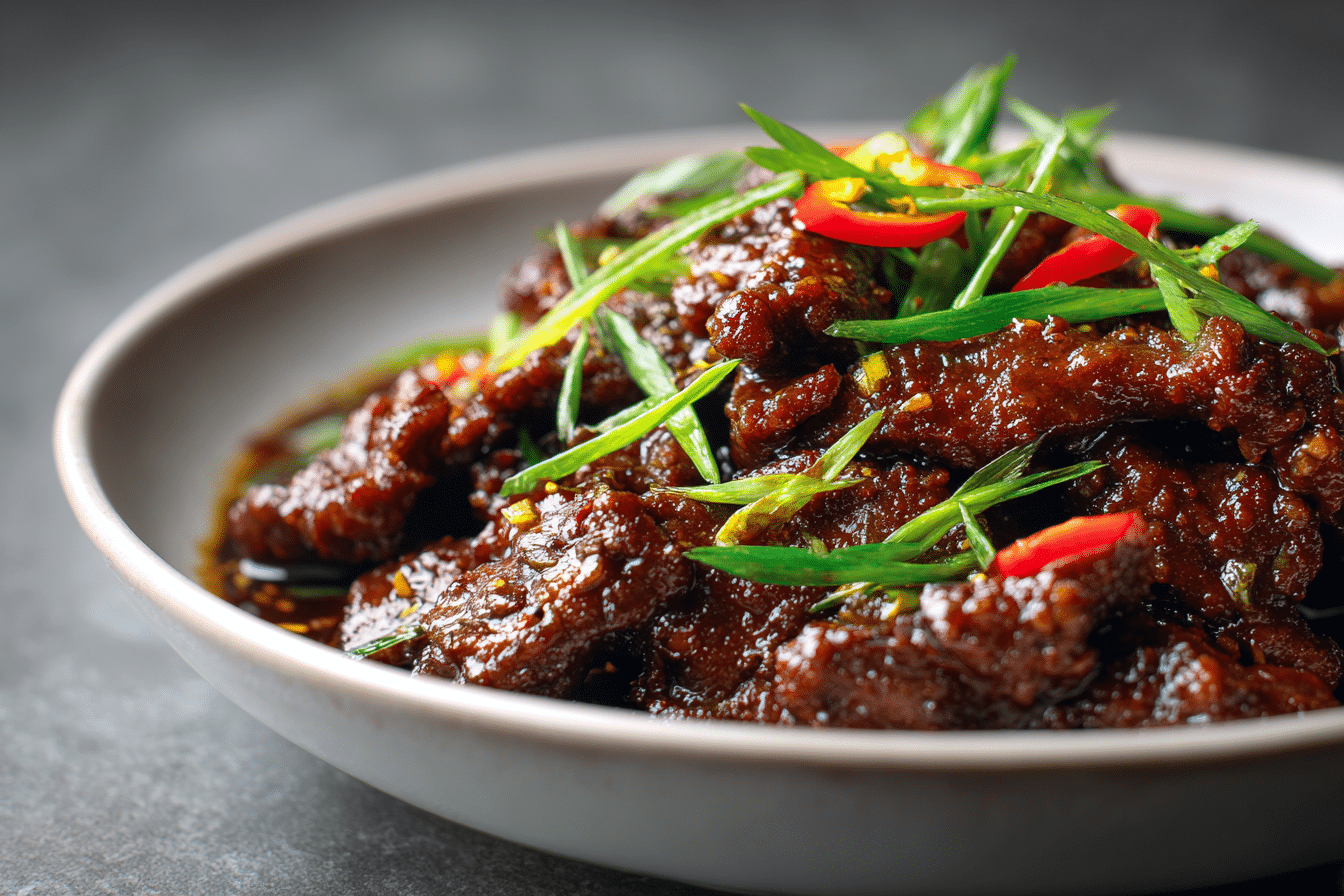
Mongolian Beef is a beloved dish known for its tender slices of beef coated in a rich, glossy sauce that’s equal parts sweet, savory, and slightly sticky. Often associated with Chinese-American takeout menus, this flavorful stir-fry is actually a Western invention, but it draws on classic techniques of Chinese-style cooking like flash-frying, soy-based sauces, and wok-searing.
What makes Mongolian Beef so popular is the irresistible contrast of textures and flavors — thin, crispy-edged beef coated in a garlicky, gingery glaze, often served over steamed rice or with stir-fried vegetables. With just a handful of pantry ingredients, you can recreate this restaurant favorite at home in about 30 minutes.
Ingredients Overview
Each component of Mongolian Beef plays a role in achieving the perfect sauce cling, beef tenderness, and flavor depth.
-
Beef (Flank Steak or Sirloin): Flank steak is traditional due to its grain and tenderness when sliced thin against the grain. Sirloin or skirt steak also work well. Freeze the meat for 20 minutes to make slicing easier.
-
Cornstarch: Tossing the beef in cornstarch creates a light crust that crisps beautifully in hot oil and helps the sauce adhere. It’s key to that glossy, silky texture.
-
Garlic and Ginger: These aromatics build the flavor base of the sauce. Use fresh for the best punch, and mince finely.
-
Soy Sauce: The foundation of the savory, umami-rich sauce. Use low-sodium if you prefer more control over salt levels.
-
Brown Sugar: Gives Mongolian Beef its signature sweetness and helps caramelize the sauce into a shiny glaze.
-
Water or Beef Broth: Loosens the sauce and adds a little volume without overpowering the flavors.
-
Scallions (Green Onions): Stirred in at the end for freshness, crunch, and a classic finish.
-
Vegetable Oil: For flash-frying the beef. Choose a neutral oil with a high smoke point, like canola or grapeseed.
Optional Additions:
-
Red pepper flakes or chili oil if you want a spicy kick
-
Sesame oil for depth
-
Broccoli or snap peas to stretch the dish with vegetables
Step-by-Step Instructions
-
Slice and Marinate the Beef:
Thinly slice flank steak against the grain into ¼-inch strips. Toss with cornstarch until fully coated. Let sit for 10 minutes while you prep the sauce — this helps tenderize the meat and ensures crisp edges. -
Make the Sauce:
In a small bowl, combine soy sauce, brown sugar, water (or broth), and a teaspoon of sesame oil (optional). Stir well and set aside. -
Heat the Oil and Sear the Beef:
In a large skillet or wok, heat vegetable oil over medium-high heat. Add the beef in batches, spacing it out so it sears rather than steams. Cook 1–2 minutes per side until browned and slightly crispy. Remove and drain on a paper towel-lined plate. -
Sauté Garlic and Ginger:
Discard most of the oil, leaving about 1 tablespoon in the pan. Add minced garlic and ginger and sauté for 30 seconds, just until fragrant. -
Add the Sauce:
Pour in the prepared soy sauce mixture and bring to a simmer. Cook for 2–3 minutes until the sauce thickens slightly and becomes glossy. -
Return the Beef:
Add the cooked beef back into the pan, tossing to coat each piece with sauce. Stir in chopped scallions and cook for another 1–2 minutes until heated through. -
Serve Immediately:
Serve over hot steamed white rice or jasmine rice. Garnish with extra scallions or sesame seeds if desired.
Tips, Variations & Substitutions
-
Slice Against the Grain: This ensures tender beef that’s easy to chew.
-
Don’t Overcrowd the Pan: Cook beef in batches so it sears properly — too much at once and it will steam.
-
Low-Carb Version: Serve over cauliflower rice and replace brown sugar with a low-carb sweetener like monk fruit.
-
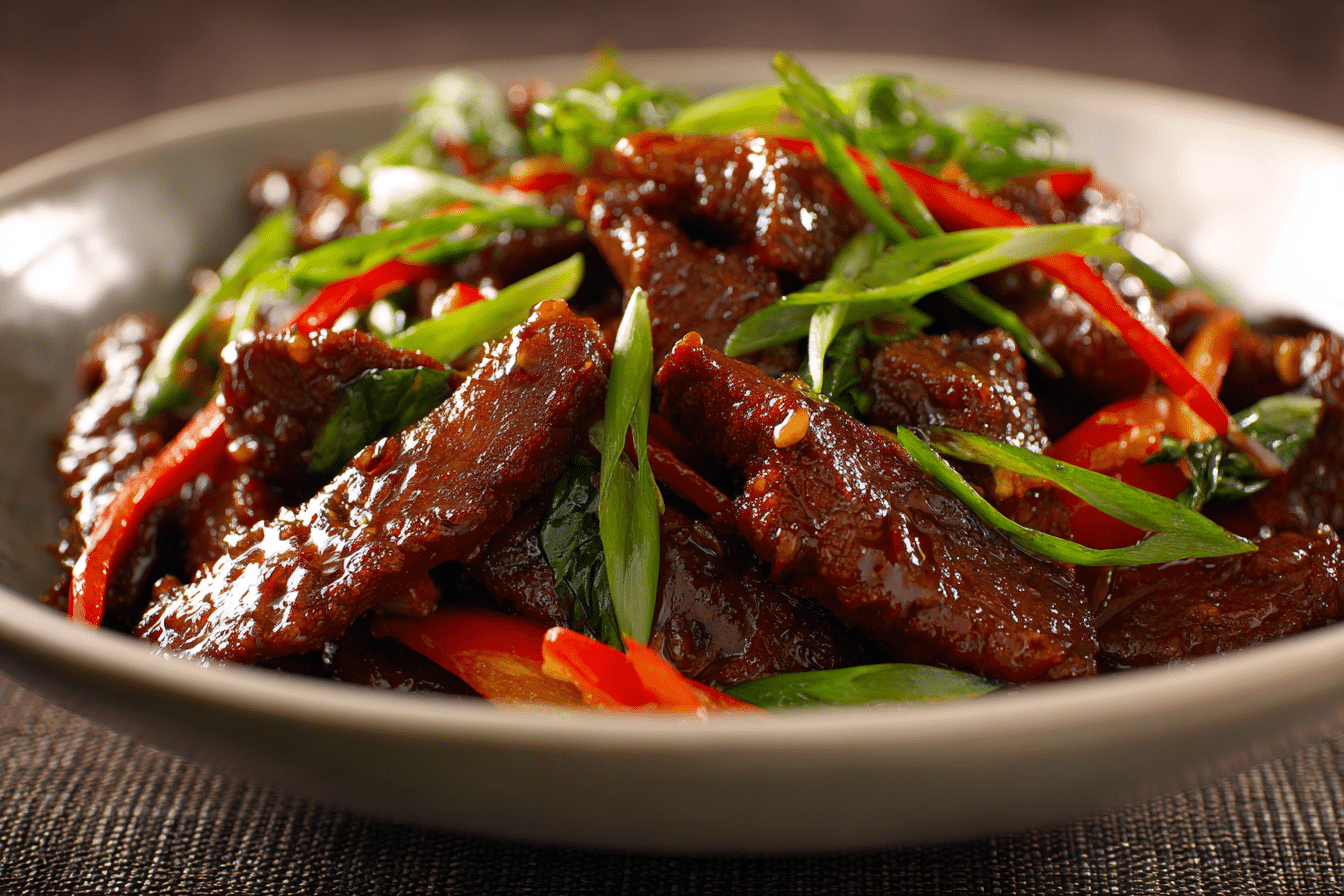
Spicy Mongolian Beef: Add chili garlic sauce, crushed red pepper, or fresh sliced chilies to the sauce.
-
Veggie Boost: Add steamed broccoli, sautéed mushrooms, or snow peas during the final step for added nutrition.
-
Gluten-Free Option: Use tamari or coconut aminos instead of soy sauce, and confirm all sauces are GF-certified.
Serving Ideas & Occasions
Mongolian Beef is incredibly versatile and pairs well with:
-
Steamed jasmine or basmati rice
-
Brown rice or quinoa for a wholesome option
-
Garlic sautéed bok choy or steamed broccoli
-
A side of crispy spring rolls or dumplings for a full takeout-style meal
This dish is perfect for:
-
Quick weeknight dinners
-
Hosting friends for an easy Asian-inspired meal
-
Meal prep — it reheats beautifully the next day
Nutritional & Health Notes
While Mongolian Beef is rich and flavorful, it can easily be adapted to fit dietary needs:
-
Protein: A generous serving of protein from lean beef makes this dish satisfying and muscle-friendly.
-
Carbs: Brown sugar and white rice bring carbs, so opt for smaller portions or lower-carb swaps if needed.
-
Fats: Most of the fat comes from frying oil, which you can reduce by pan-searing with less oil or draining well.
-
Sodium: Soy sauce adds saltiness, so choose low-sodium soy or dilute with water or broth.
For a lighter version, use less sugar, cook with minimal oil, and add vegetables to bulk it up.
FAQs
Q1: Can I make Mongolian Beef ahead of time?
Yes. The beef and sauce can be cooked and stored separately or together in the fridge for up to 3 days. Reheat gently in a skillet to maintain texture.
Q2: What’s the best cut of beef to use?
Flank steak is the most traditional, but sirloin, skirt steak, or even ribeye can be used. Just slice thinly and against the grain.
Q3: Is Mongolian Beef spicy?
Typically, no. It’s more sweet and savory, but you can add spice by including red pepper flakes or chili paste.
Q4: Can I make this dish without cornstarch?
Cornstarch helps create the crispy crust and thick sauce, but arrowroot or tapioca starch can be used as substitutes. You can skip it for a softer texture, but it will change the feel of the dish.
Q5: How do I keep the beef tender?
Slice it thinly against the grain, use a quick high-heat sear, and don’t overcook it. Letting it rest briefly before cooking also helps.
Q6: Can I freeze Mongolian Beef?
Yes. Let it cool completely, then freeze in an airtight container for up to 2 months. Reheat on the stove with a splash of water to loosen the sauce.
Q7: What vegetables can I add?
Broccoli, snow peas, bell peppers, or baby bok choy all work beautifully and stretch the dish further without overpowering the beef.
Mongolian Beef – A Sweet and Savory Takeout Classic at Home
A classic takeout-style dish of tender, crispy beef tossed in a garlicky, sweet-savory soy glaze. Easy to make at home in under 30 minutes.
Ingredients
-
1 lb flank steak, thinly sliced against the grain
-
¼ cup cornstarch
-
¼ cup vegetable oil
-
3 garlic cloves, minced
-
1-inch piece fresh ginger, grated
-
½ cup low-sodium soy sauce
-
⅓ cup brown sugar
-
¼ cup water or beef broth
-
1 tsp sesame oil (optional)
-
3 scallions, chopped
Instructions
-
Toss sliced steak with cornstarch. Let rest 10 minutes.
-
In a small bowl, combine soy sauce, sugar, water, and sesame oil. Set aside.
-
Heat oil in a wok or skillet. Sear beef in batches until browned and crisp. Remove to plate.
-
Discard most oil. Sauté garlic and ginger for 30 seconds.
-
Add sauce and simmer 2–3 minutes until thickened.
-
Return beef to pan and toss to coat. Stir in scallions.
-
Serve hot over rice.
Notes
Add chili flakes for heat. Use tamari for a gluten-free version. Add vegetables like broccoli or snap peas to stretch the dish.