
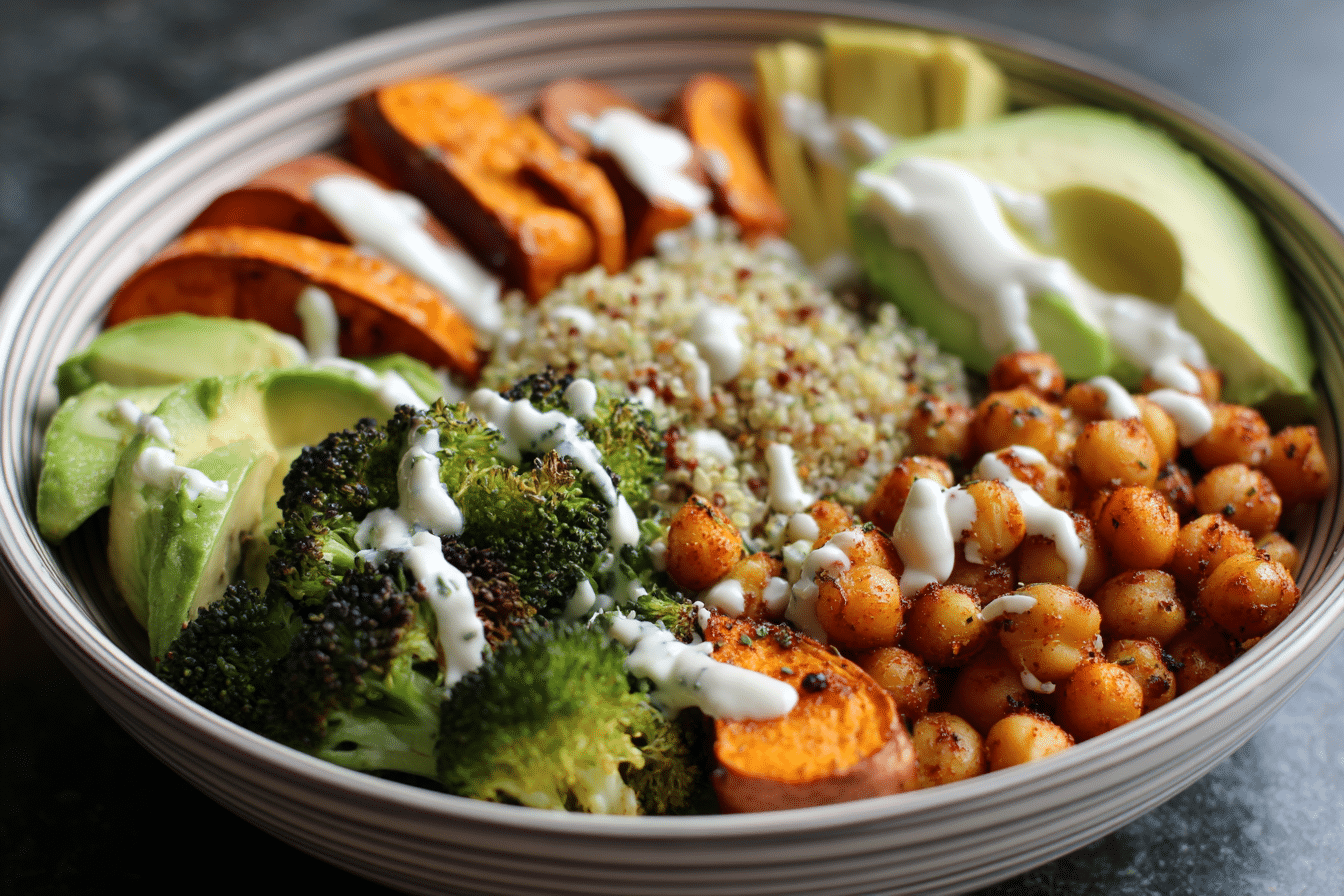
Buddha Bowls are a vibrant, nourishing, and endlessly customizable meal that has become a staple in plant-based kitchens around the world. Packed with colorful vegetables, hearty grains, protein-rich legumes, and a drizzle of bold, creamy dressing, this bowl-style meal is as visually appealing as it is satisfying.
Rooted in balance and nourishment, Buddha Bowls are thought to be named after the way a monk’s bowl is filled with small portions of food offered by others — wholesome and varied. These bowls have grown popular in modern wellness circles thanks to their adaptability, beautiful presentation, and nutrient density.
Whether you’re prepping lunches for the week or serving a wholesome dinner, a Buddha Bowl offers a complete meal in one bowl, satisfying every taste and texture.
Ingredients Overview
The beauty of a Buddha Bowl lies in its flexibility, but most bowls contain five essential components: a grain base, a protein, fresh or roasted vegetables, healthy fats, and a flavorful dressing. Here’s a breakdown of each element and tips for choosing the right ingredients.
1. Whole Grains
Grains act as the foundation and provide complex carbs and fiber. Common options include:
-
Quinoa – High in protein and gluten-free.
-
Brown rice – Mild flavor and hearty texture.
-
Farro – Chewy and nutty; great for added texture.
-
Barley or bulgur – Add variety and absorb flavors well.
Cook grains in vegetable broth or add a bay leaf during cooking for a boost in flavor.
2. Plant-Based Protein
Protein keeps the bowl satisfying and supports energy levels. Try:
-
Chickpeas – Roasted with spices for extra crunch.
-
Tofu or tempeh – Marinated and pan-seared for added depth.
-
Lentils – Earthy and protein-packed.
-
Edamame – Lightly salted and bright green for visual contrast.
For extra crunch, try air-frying chickpeas with smoked paprika and sea salt.
3. Vegetables
A mix of raw and roasted vegetables adds color, crunch, and nutrients:
-
Roasted sweet potatoes or carrots – Sweet and soft.
-
Steamed broccoli or kale – Rich in antioxidants.
-
Raw cabbage or radish – Crisp and peppery.
-
Avocado slices – Creamy, healthy fat.
Use seasonal produce for the freshest taste and visual variety.
4. Healthy Fats
Fat adds creaminess and helps absorb fat-soluble vitamins:
-
Tahini, avocado, nuts, or seeds (like pumpkin or sunflower) are common choices.
-
A sprinkle of hemp hearts adds protein and omega-3s.
5. Dressing
The dressing ties everything together and adds bold flavor. Popular choices include:
-
Lemon tahini dressing
-
Peanut lime sauce
-
Miso-ginger vinaigrette
-
Avocado-cilantro dressing
Make extra dressing — it stores well in the fridge for 4–5 days.
Step-by-Step Instructions
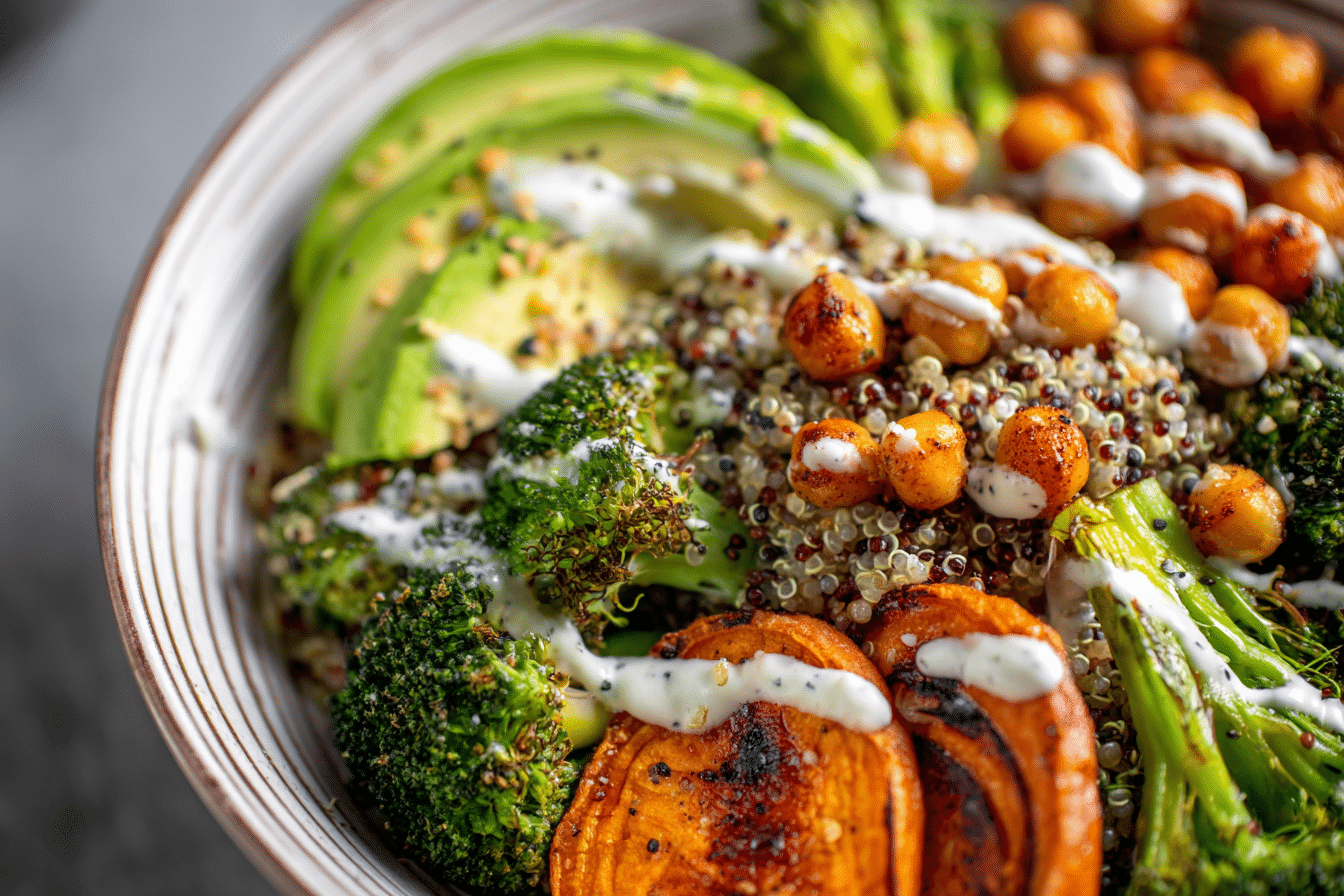
Creating a Buddha Bowl is simple and meditative. Here’s a detailed guide to building one from scratch.
Step 1: Cook the Grain
Start with 1 cup of dry grain. Rinse it well and cook according to package instructions. Fluff with a fork and set aside. Let it cool slightly for better bowl layering.
Chef’s Tip: Add a pinch of salt and 1 tsp olive oil to the cooking water for better flavor and texture.
Step 2: Prep the Vegetables
Cut your vegetables into even pieces to ensure consistent cooking. Roast denser options (like carrots, sweet potatoes, or Brussels sprouts) at 400°F for 20–25 minutes with olive oil, salt, and pepper. Use a baking sheet lined with parchment for easy cleanup.
Meanwhile, wash and prep raw vegetables like shredded red cabbage, cucumber ribbons, or cherry tomatoes.
Step 3: Cook the Protein
If using tofu, press it for 10–15 minutes, then cube and toss in soy sauce, garlic powder, and cornstarch. Pan-fry in a bit of oil until golden on all sides.
Chickpeas can be oven-roasted with cumin, garlic powder, and a drizzle of olive oil for 25 minutes.
Tempeh benefits from a quick steam followed by a soy-maple glaze and pan-searing.
Step 4: Make the Dressing
In a small blender or bowl, whisk together your chosen dressing. A classic tahini sauce includes:
-
¼ cup tahini
-
Juice of 1 lemon
-
1 garlic clove (grated)
-
2–3 tbsp water (to thin)
-
Salt to taste
Blend until smooth and creamy. Adjust the consistency to your liking.
Step 5: Assemble the Bowl
In each bowl, layer the grains, followed by your protein, then arrange the vegetables in colorful sections. Top with seeds, sprouts, or nuts. Drizzle with dressing just before serving.
Serve warm, at room temperature, or chilled — Buddha Bowls are flexible to your timing and mood.
Tips, Variations & Substitutions
Expert Tips
-
Use leftovers creatively: roasted veggies or grains from last night’s dinner work beautifully.
-
Keep components separate for meal prep; assemble just before eating.
-
Toast nuts or seeds for more aroma and crunch.
Regional Variations
-
Asian-inspired: Add sesame oil, edamame, pickled ginger, and miso dressing.
-
Mediterranean: Use hummus, olives, sun-dried tomatoes, and a lemon herb vinaigrette.
-
Mexican-style: Include black beans, corn, avocado, and chipotle dressing.
Dietary Substitutions
-
Gluten-free: Choose quinoa or brown rice.
-
Vegan: Buddha Bowls are naturally vegan; just double-check dressings.
-
Low-carb: Swap grains for cauliflower rice or zucchini noodles.
Serving Ideas & Occasions
Buddha Bowls are ideal for:
-
Weekday lunches – easy to prep ahead and pack.
-
Dinner parties – set up a DIY bowl bar for guests to build their own.
-
Post-workout meals – thanks to the perfect blend of carbs, proteins, and fats.
-
Seasonal celebrations – adapt ingredients to what’s in season for spring, fall, or holiday spreads.
Pair with a sparkling kombucha, infused water, or iced herbal tea for a complete, refreshing meal.
Nutritional & Health Notes
Buddha Bowls are naturally nutrient-dense. When built intentionally, they provide:
-
Complex carbohydrates from whole grains
-
Plant-based proteins from legumes and tofu
-
Healthy fats from seeds, nuts, and avocados
-
Antioxidants from colorful vegetables
This combination supports sustained energy, blood sugar balance, and digestive health. Portion control is easy thanks to the one-bowl format, and you can adjust macros to fit your dietary goals.
FAQs
Q1: Can I make Buddha Bowls ahead of time?
A1: Yes. Prep all components in advance and store them separately. Combine just before eating to maintain texture, especially for dressings and roasted items.
Q2: What grain is best for Buddha Bowls?
A2: Quinoa is a top choice due to its high protein content and quick cook time, but brown rice, farro, or bulgur all work well depending on your preference.
Q3: How do I keep the vegetables from getting soggy?
A3: Let roasted vegetables cool before storing, and avoid sealing them while warm. Keep raw ingredients like lettuce or cabbage separate to preserve crunch.
Q4: Is a Buddha Bowl always vegan?
A4: Traditionally, yes — they’re based on whole, plant-based ingredients. However, you can include grilled chicken, boiled eggs, or yogurt-based dressings for a non-vegan twist.
Q5: What dressing goes best with Buddha Bowls?
A5: Tahini-based dressings are classic, but peanut lime, miso-ginger, or avocado-cilantro are also great options. The dressing should balance acidity, creaminess, and umami.
Q6: Can I freeze Buddha Bowl components?
A6: Grains and legumes freeze well. Roast vegetables can be frozen but may lose texture. Avoid freezing fresh greens or dressings with fresh herbs or garlic.
Q7: Are Buddha Bowls good for weight loss?
A7: Absolutely. They offer fiber, healthy fats, and plant proteins that help with fullness and balance. Use minimal oil and measure dressing portions for better calorie control.
PrintColorful Buddha Bowls – A Nourishing Plant-Based Favorite
A colorful and customizable plant-based meal featuring grains, veggies, legumes, and creamy tahini dressing — perfect for lunch, dinner, or meal prep.
Ingredients
-
1 cup cooked quinoa or brown rice
-
1 cup roasted sweet potatoes (cubed)
-
1 cup steamed broccoli
-
½ cup shredded red cabbage
-
½ avocado, sliced
-
½ cup roasted chickpeas or grilled tofu
-
2 tbsp tahini
-
Juice of 1 lemon
-
1 garlic clove, minced
-
2–3 tbsp water
-
Salt to taste
-
Optional: pumpkin seeds, hemp hearts, sesame seeds
Instructions
-
Cook quinoa or rice according to package instructions. Fluff and let cool.
-
Roast sweet potatoes at 400°F for 20–25 minutes with olive oil and salt.
-
Steam broccoli until bright green and tender-crisp.
-
Roast chickpeas or pan-sear marinated tofu.
-
Mix tahini, lemon juice, garlic, and water until smooth. Add salt to taste.
-
In a bowl, layer grains, vegetables, and protein. Drizzle with dressing.
-
Top with seeds or fresh herbs. Serve warm or cold.
Notes
Store components separately for meal prep. Try different vegetables or dressings based on the season or taste preferences.