
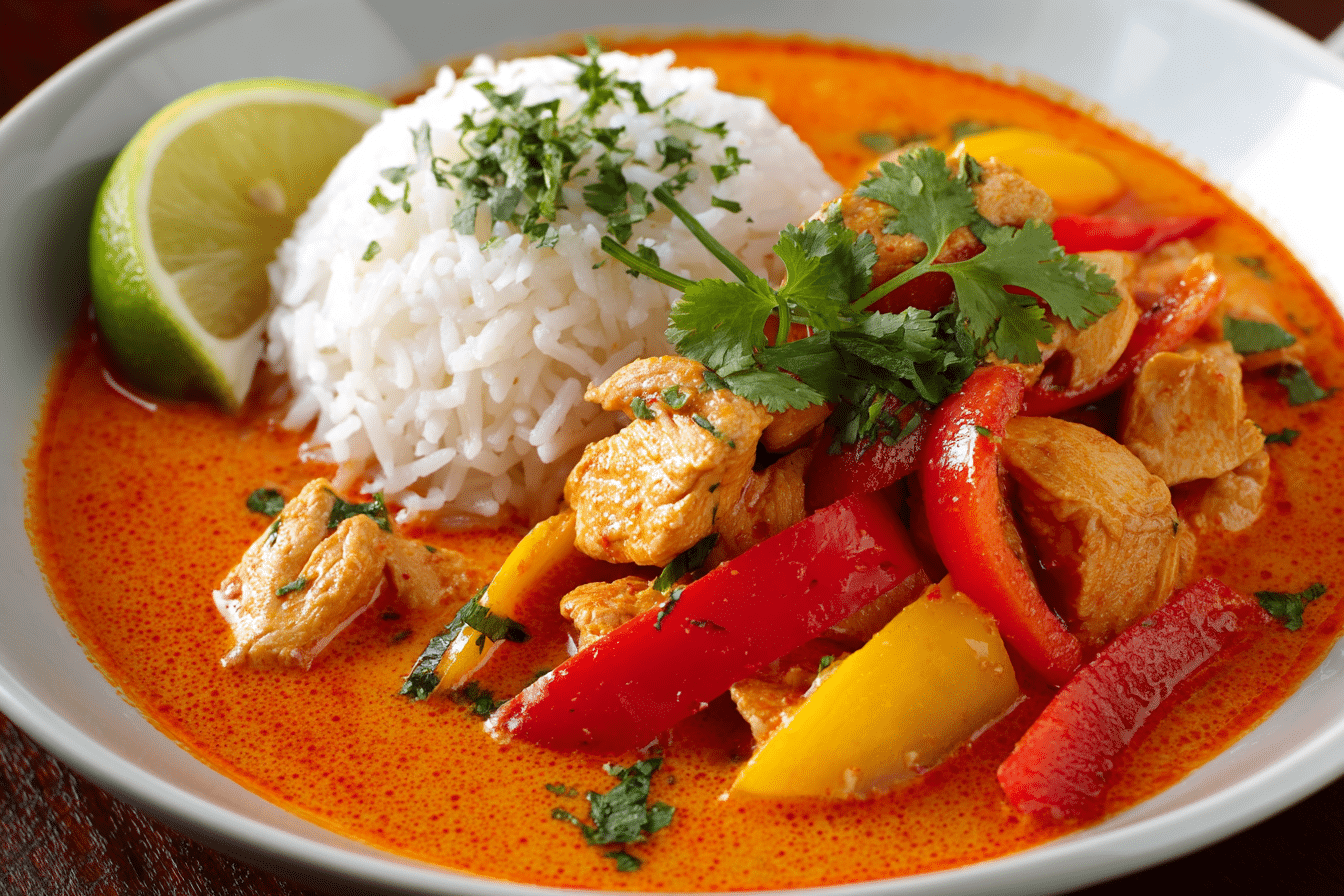
Thai red curry is the kind of dish that delivers bold flavor with surprisingly little effort. This Easy Thai Red Curry is rich, aromatic, and deeply satisfying — made with creamy coconut milk, red curry paste, tender vegetables, and your choice of protein, all simmered into a warm, fragrant bowl of comfort.
Rooted in traditional Thai cuisine, red curry (or gaeng phet) balances spicy, sweet, salty, and savory elements with a beautiful red hue from the curry paste. While authentic versions often involve pounding fresh spices, this recipe simplifies the process using store-bought curry paste without sacrificing flavor.
The result? A restaurant-quality curry that comes together in about 30 minutes, perfect for busy weeknights or cozy weekend dinners — and customizable to suit nearly any diet.
Ingredients Overview
This easy Thai red curry uses a short list of ingredients that pack in maximum flavor. Here’s what each component adds:
-
Thai Red Curry Paste: The flavor base — it brings heat, aromatics, and depth. Look for brands like Mae Ploy or Thai Kitchen. Adjust the amount to control spice level.
-
Coconut Milk: Full-fat coconut milk creates the creamy, luscious texture that makes Thai curry so comforting. Avoid light versions, which can be too watery.
-
Protein of Choice:
-
Chicken: Boneless, skinless thighs or breasts work great.
-
Tofu: Firm tofu, cubed and lightly pan-fried for a vegan option.
-
Shrimp: Quick-cooking and ideal for a seafood version.
-
-
Vegetables:
-
Bell peppers, zucchini, carrots, or snap peas are all great. The combo of soft and crisp textures keeps things interesting.
-
Thai basil or cilantro (optional) for garnish and fresh flavor.
-
-
Fish Sauce: Adds deep umami and traditional Thai saltiness. For vegetarian versions, use soy sauce or tamari.
-
Brown Sugar: A small amount to balance the spice and acidity.
-
Lime Juice: Brightens everything and adds a final zing.
-
Oil (Coconut or Neutral): For sautéing the curry paste.
Ingredient Notes & Substitutions
-
Vegan? Use tofu or chickpeas, and swap fish sauce with soy sauce or coconut aminos.
-
Coconut Allergy? Try cashew cream or oat milk, though the flavor will differ slightly.
-
Spice Level: Use less curry paste for mild heat, or add chili flakes for more kick.
-
Thai Basil vs. Regular Basil: Thai basil has a sweet, slightly licorice note. Use regular basil if that’s what you have.
Step-by-Step Instructions
1. Sauté the Curry Paste
In a large skillet or wok, heat 1 tablespoon of coconut or vegetable oil over medium heat. Add 2–3 tablespoons of Thai red curry paste (more or less to taste) and stir-fry for 1–2 minutes. You’ll smell its bold aroma as it sizzles — this step deepens the flavor.
2. Add Coconut Milk
Slowly pour in one 14-ounce can of full-fat coconut milk, stirring well to dissolve the curry paste. Let it simmer for 2–3 minutes until the sauce is smooth, creamy, and slightly thickened.
3. Add Protein
-
Chicken: Add sliced chicken and simmer until cooked through, about 8–10 minutes.
-
Tofu: Add crispy tofu cubes and let them absorb the flavor for 5–6 minutes.
-
Shrimp: Add peeled shrimp and cook for 3–5 minutes until pink and opaque.
4. Add Vegetables
Toss in sliced bell peppers, zucchini, or your favorite stir-fry vegetables. Simmer another 5–7 minutes until just tender but still vibrant in color.
5. Season
Stir in 1 tablespoon fish sauce (or soy sauce), 1 teaspoon brown sugar, and a generous squeeze of lime juice. Taste and adjust — more fish sauce for salt, more sugar for sweetness, more lime for acidity.
6. Finish & Garnish
Simmer everything together for 2–3 more minutes until the curry thickens slightly and the flavors meld. Top with chopped cilantro, Thai basil, or fresh chili slices if you like it spicy.
7. Serve
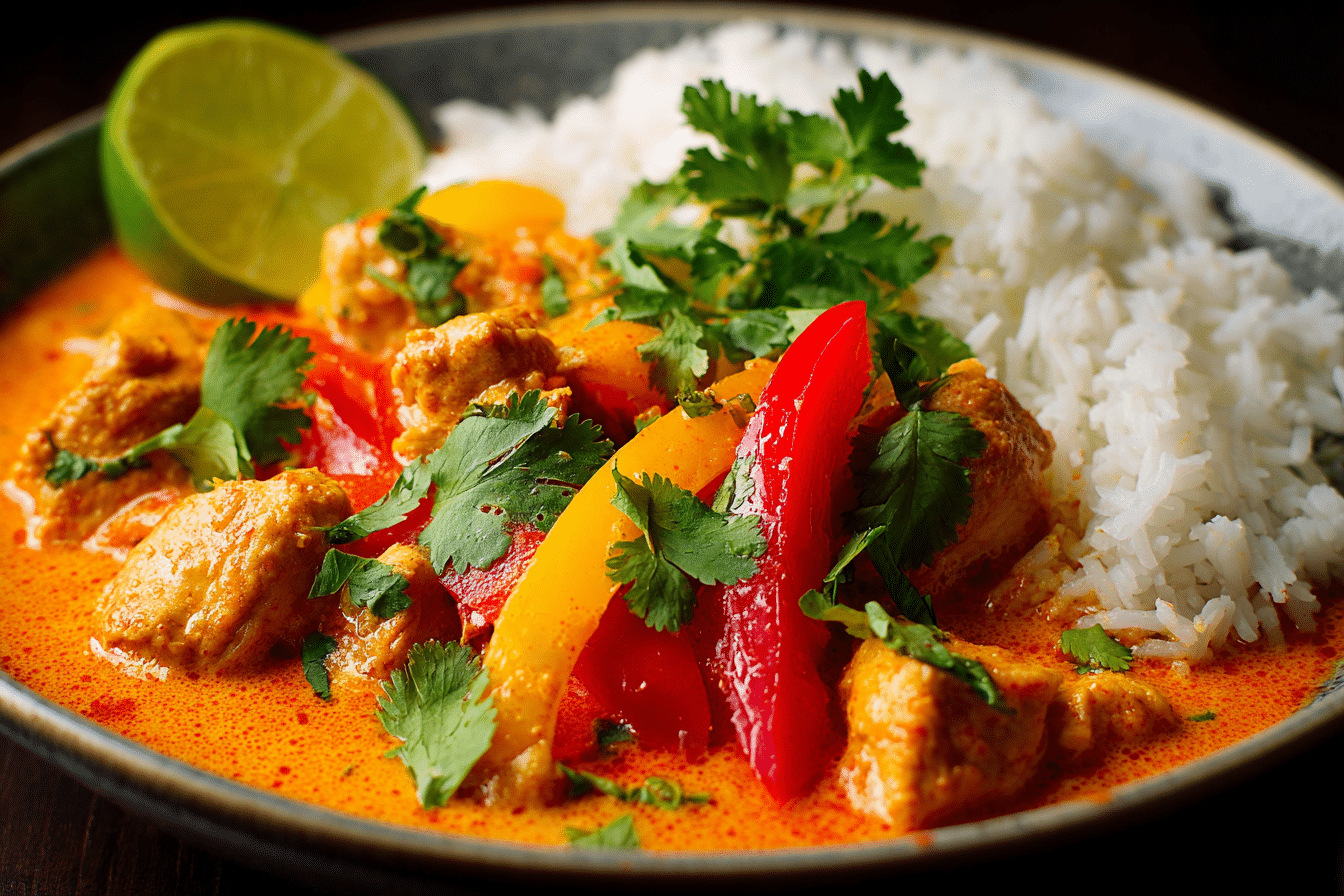
Spoon the curry over hot jasmine rice or rice noodles. A scoop of rice soaking up the rich sauce makes every bite satisfying.
Tips, Variations & Substitutions
-
Make It a Soup: Add an extra cup of vegetable or chicken broth for a more soupy consistency.
-
Low-Carb Option: Serve with cauliflower rice or shirataki noodles.
-
No Curry Paste? Blend garlic, ginger, chili, and lemongrass with paprika and tomato paste as a quick substitute — though the flavor will differ.
-
Add Crunch: Top with chopped peanuts or fried shallots for texture.
-
Boost the Greens: Stir in baby spinach or kale at the end for added nutrition.
Serving Ideas & Occasions
-
Weeknight Dinner: Fast, flavorful, and minimal dishes.
-
Casual Entertaining: Set out bowls of rice, curry, and garnishes for a Thai-inspired dinner party.
-
Meal Prep: Cools and stores well for 3–4 days in the fridge.
-
Comfort Food Night: Serve with jasmine rice and Thai iced tea for a cozy meal.
Pairs beautifully with:
-
Steamed jasmine or coconut rice
-
Thai cucumber salad with vinegar and sugar
-
Mango sticky rice for dessert
Nutritional & Health Notes
This red curry delivers a satisfying blend of:
-
Healthy fats from coconut milk that keep you full and support energy.
-
Lean protein (chicken, tofu, or shrimp) to help muscle repair and hunger control.
-
Fiber-rich vegetables that add color, antioxidants, and crunch.
For a lighter version, reduce the coconut milk slightly and increase vegetables. Opt for tofu or shrimp over red meat to keep saturated fat lower. The dish is naturally gluten-free with the right sauce choices.
Portion sizes are easy to control by adjusting rice and curry ratios, and leftovers are often even more flavorful the next day as the curry deepens.
FAQs
Q1: Can I make this curry ahead of time?
Yes! Thai red curry tastes even better the next day. Store in the fridge for up to 4 days and reheat gently on the stovetop or microwave.
Q2: Is Thai red curry very spicy?
It can be, depending on the curry paste. Start with 2 tablespoons and adjust to your heat tolerance. You can always add chili oil or flakes at the end.
Q3: Can I freeze Thai red curry?
Yes. Freeze cooled curry (without rice) in airtight containers for up to 2 months. Thaw overnight and reheat on the stove with a splash of broth to loosen.
Q4: What’s the difference between red, green, and yellow curry?
Red curry is made with red chilies and is moderately spicy. Green is typically spicier with fresh herbs. Yellow curry is milder and has turmeric and warm spices.
Q5: How do I thicken Thai curry?
Simmer uncovered to reduce, or add a cornstarch slurry (1 tsp cornstarch + 1 tbsp water) and simmer briefly.
Q6: What can I use instead of fish sauce?
Soy sauce, tamari (for gluten-free), or coconut aminos work well. Add a bit of lime juice or rice vinegar to mimic fish sauce’s tang.
Q7: Can I use curry powder instead of red curry paste?
Not directly. Curry powder has a completely different flavor profile (more Indian-style). If needed, combine paprika, garlic, and chili with ginger and lemongrass as a basic base.
PrintEasy Thai Red Curry – A Creamy, Flavorful 30-Minute Dinner
A quick and easy Thai red curry packed with bold flavor, creamy coconut milk, and your choice of protein and vegetables. Ready in just 30 minutes for a cozy, delicious dinner.
Ingredients
-
2–3 tbsp Thai red curry paste
-
1 tbsp coconut oil
-
1 (14 oz) can full-fat coconut milk
-
1 lb chicken breast, tofu, or shrimp
-
2 cups mixed vegetables (bell pepper, zucchini, carrots)
-
1 tbsp fish sauce or soy sauce
-
1 tsp brown sugar
-
Juice of ½ lime
-
Fresh Thai basil or cilantro (for garnish)
Instructions
-
Heat oil in a skillet over medium heat. Sauté curry paste for 1–2 minutes until fragrant.
-
Stir in coconut milk and bring to a simmer.
-
Add chicken, tofu, or shrimp. Simmer until just cooked through.
-
Add vegetables and cook 5–7 minutes until tender.
-
Stir in fish sauce, sugar, and lime juice. Adjust seasoning to taste.
-
Serve over rice, garnished with herbs or chili slices if desired.
Notes
-
For vegan: use tofu and soy sauce.
-
Add extra broth to turn into a curry soup.
-
Store leftovers up to 4 days or freeze up to 2 months.