
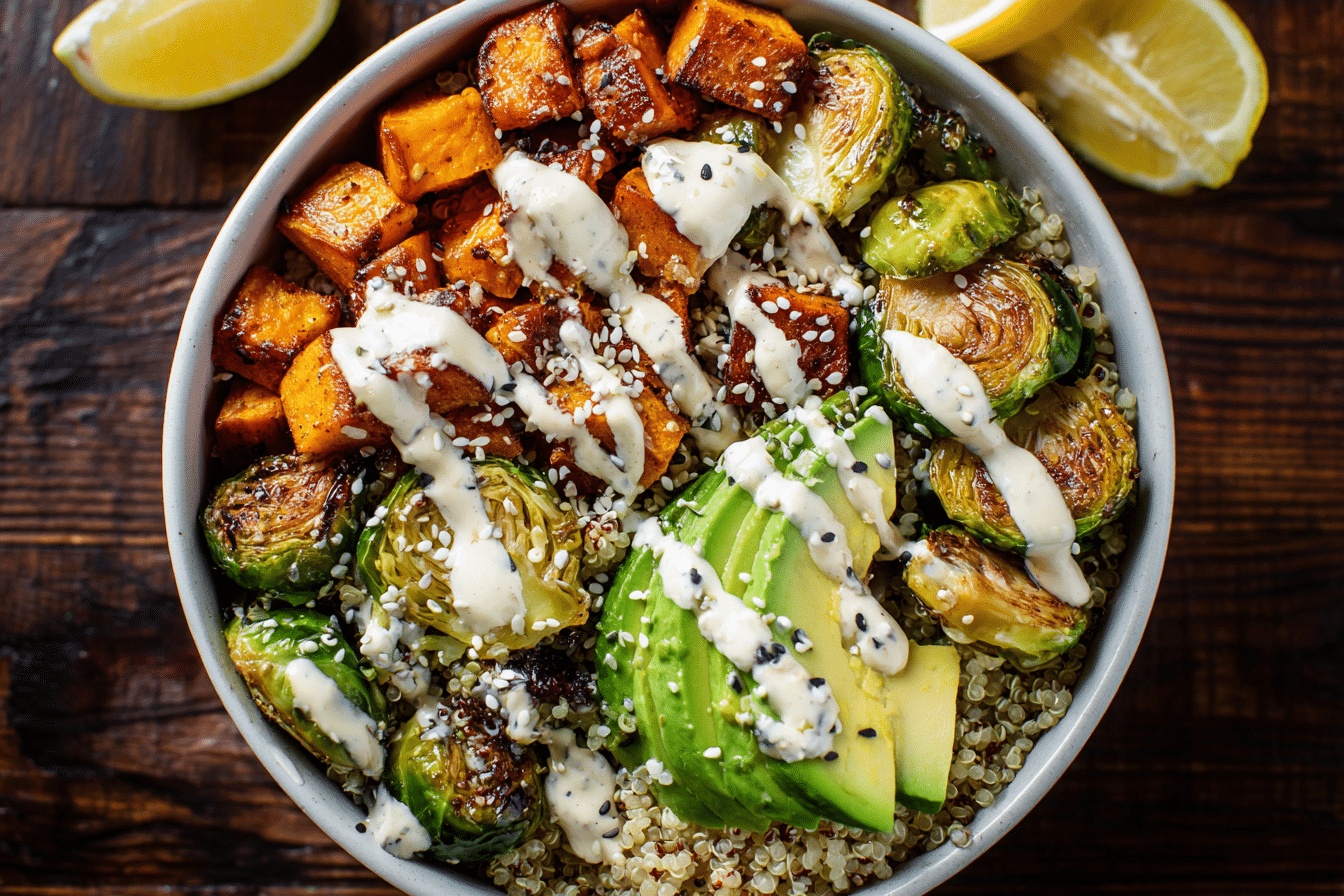
Few meals strike the perfect balance between vibrant nutrition, satisfying texture, and visual appeal like a Roasted Veggie Buddha Bowl. Inspired by Eastern philosophy and modern plant-based cooking, this wholesome bowl is a medley of roasted seasonal vegetables, hearty grains, creamy dressings, and crisp, fresh toppings.
Originally coined for its generous, rounded presentation — like Buddha’s belly — this style of bowl has become a favorite among health-conscious eaters and food stylists alike. It’s not just about being healthy; it’s about celebrating ingredients in their most flavorful forms.
This roasted veggie version focuses on caramelized edges, earthy aromas, and a contrast of temperatures and textures: warm, crispy vegetables paired with cool greens, soft grains, and silky sauces. Whether you’re meal prepping for the week or looking for a cozy weeknight dinner, this Buddha Bowl brings variety, nourishment, and color to your table.
Ingredients Overview
Each component of a Buddha Bowl plays a role in both flavor and nutrition. Here’s a look at what you’ll need — and why each one matters:
1. Roasted Vegetables
-
Sweet Potatoes: Slightly sweet and fluffy, they roast beautifully and provide slow-digesting carbs.
-
Cauliflower: When roasted, it becomes nutty and crisp around the edges — perfect for adding depth.
-
Brussels Sprouts: These mini cabbages crisp up on the outside while staying tender inside.
-
Red Onion: Adds a mild sharpness that mellows and sweetens in the oven.
-
Zucchini or Bell Peppers: Optional, but they add juiciness and color.
Tip: Cut veggies in uniform sizes to ensure even roasting.
2. Grain Base
-
Quinoa: Fluffy, protein-packed, and naturally gluten-free.
-
Brown Rice: A slightly nutty option with a chewy texture.
-
Farro or Couscous: For a more Mediterranean twist.
Choose based on dietary needs or flavor preference — all work wonderfully.
3. Greens
-
Spinach, Kale, or Mixed Greens: Raw greens balance out the warm veggies and add freshness.
-
For a crunchier twist, lightly massaged kale works great with lemon juice and salt.
4. Plant-Based Protein
-
Chickpeas: Roasted or pan-fried for texture.
-
Tofu or Tempeh: Cubed and sautéed or roasted — adds chew and protein power.
5. Toppings
-
Avocado Slices: Creamy and rich, balances the roasted edges of the veggies.
-
Pickled Onions or Sauerkraut: For brightness and acidity.
-
Nuts or Seeds: Toasted sunflower seeds or sliced almonds offer crunch.
6. Dressing
-
Tahini Lemon Dressing: Creamy, nutty, and citrusy — the classic choice.
-
Hummus or Cashew Sauce: Offers different flavor profiles with a smooth texture.
-
Yogurt-Based Sauce: For non-vegan option lovers.
Step-by-Step Instructions
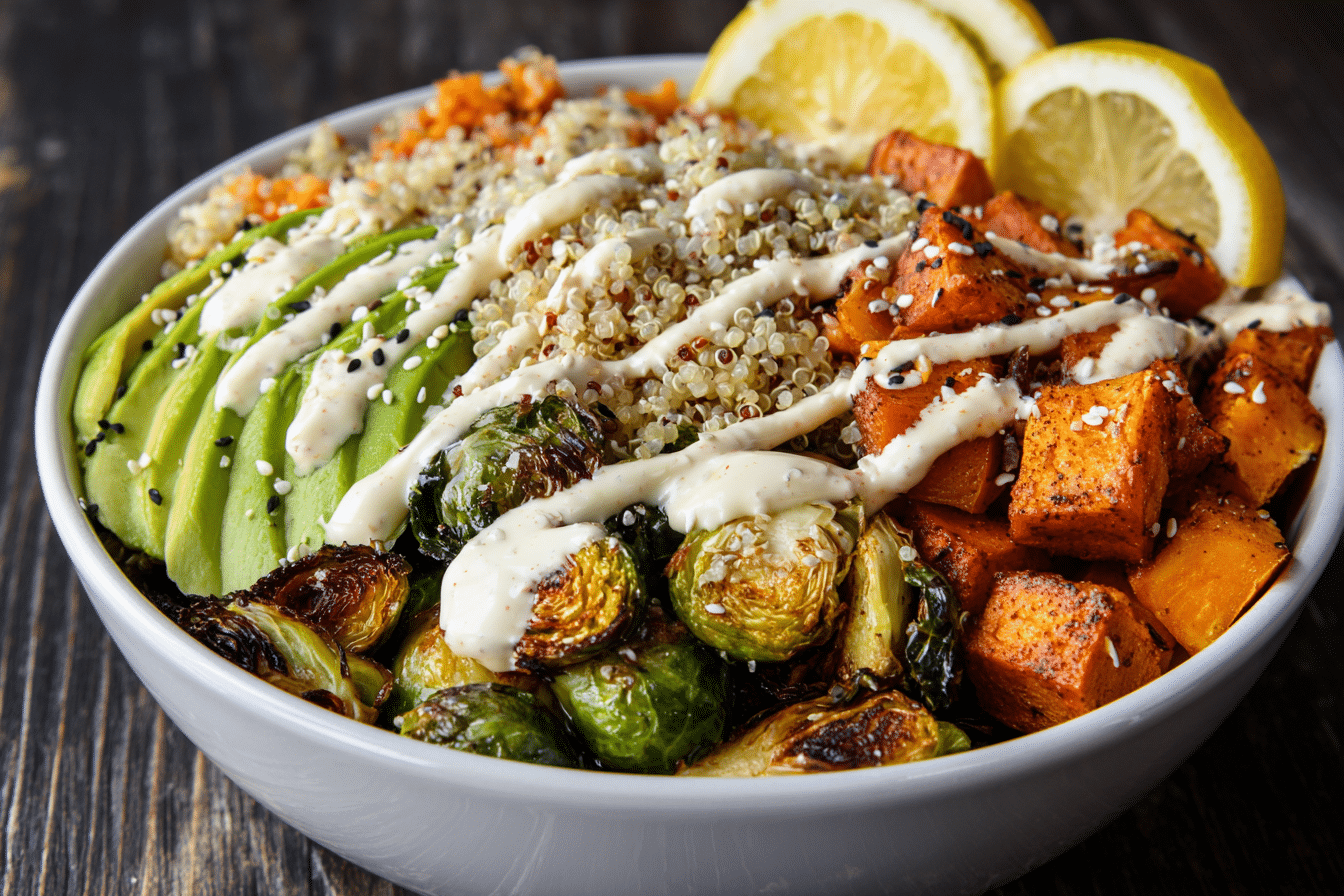
1. Prep the Veggies
Wash and chop your vegetables into bite-sized, even pieces. Aim for uniformity in size to promote even roasting. Preheat your oven to 425°F (220°C).
2. Season & Roast
Toss the vegetables with olive oil, salt, pepper, smoked paprika, and garlic powder. Spread them in a single layer on parchment-lined baking sheets — don’t overcrowd.
Roast for:
-
Sweet potatoes – 30 minutes, flipping halfway.
-
Cauliflower and Brussels sprouts – 25–30 minutes.
-
Red onion and zucchini – 20–25 minutes.
You’ll know they’re done when edges are golden brown and slightly crisp.
3. Cook Your Grain
While veggies roast, prepare your grain of choice:
-
Quinoa: 1 cup quinoa + 2 cups water. Simmer for 15 minutes, then fluff.
-
Brown rice: Rinse and cook per package instructions.
Add a pinch of salt and drizzle of olive oil or lemon juice for added flavor.
4. Prepare the Protein
-
Roasted Chickpeas: Toss canned, drained chickpeas in olive oil, cumin, and paprika. Roast at 400°F for 25–30 minutes until crunchy.
-
Tofu/Tempeh: Marinate in tamari, garlic, and maple syrup for 10 minutes. Then sauté or bake until golden.
5. Make the Dressing
Whisk together:
-
1/4 cup tahini
-
2 tbsp lemon juice
-
1 tbsp maple syrup
-
1 minced garlic clove
-
Water to thin
-
Salt to taste
Blend until smooth and creamy. Adjust seasoning as needed.
6. Assemble Your Bowl
Start with the grain at the bottom. Layer on your roasted veggies, a handful of greens, your chosen protein, and any toppings.
Finish with a generous drizzle of dressing and sprinkle with seeds or nuts.
Tips, Variations & Substitutions
Expert Tips:
-
Roast vegetables in batches to avoid steaming.
-
Add dressing just before eating to keep textures intact.
-
For meal prep, store components separately and combine before serving.
Variations:
-
Mexican-Inspired: Add black beans, corn, avocado, and chipotle lime dressing.
-
Mediterranean Bowl: Use farro, roasted eggplant, hummus, olives, and feta (if not vegan).
-
Asian-Inspired: Use brown rice, sesame tofu, edamame, and a ginger-miso dressing.
Dietary Substitutions:
-
Low Carb: Use cauliflower rice instead of grains.
-
Gluten-Free: Stick to quinoa or rice; avoid couscous and farro.
-
Nut-Free: Skip nuts in toppings and use sunflower seed butter or tahini in dressing.
Serving Ideas & Occasions
Roasted Veggie Buddha Bowls are a visual feast and versatile for:
-
Weeknight dinners when you want something hearty yet clean.
-
Lunch meal prep — the components stay fresh for several days.
-
Holiday potlucks — just make it on a large platter.
-
Pair with sparkling water or a light herbal tea for a refreshingly light experience.
They’re cozy enough for cold nights but still fresh and balanced for warmer weather too.
Nutritional & Health Notes
This bowl delivers a balanced plate: complex carbs, healthy fats, plant-based protein, and a rainbow of micronutrients.
-
Sweet potatoes and grains provide energy and fiber.
-
Leafy greens and cruciferous vegetables offer antioxidants and digestive support.
-
Chickpeas or tofu bring satiating protein without heaviness.
-
The tahini dressing adds calcium, iron, and healthy fats.
Portion control is easy — build your bowl based on your hunger, and skip nothing. For weight-conscious eaters, reduce grains slightly and add more greens or protein.
FAQs
Q1: Can I roast the veggies ahead of time?
Yes. Roasted vegetables can be stored in an airtight container in the fridge for up to 4 days. Reheat them in the oven or air fryer to revive crispiness before serving.
Q2: What are the best grains for Buddha Bowls?
Quinoa, brown rice, farro, couscous, and barley all work well. For a gluten-free option, quinoa or rice are ideal. Want something lighter? Try cauliflower rice.
Q3: How can I add more protein?
Add a scoop of cooked lentils, a boiled egg (if not vegan), or increase the amount of tofu/tempeh. Roasted chickpeas and hemp seeds are also great additions.
Q4: Is this recipe kid-friendly?
Absolutely. You can serve the roasted veggies and grains separately for picky eaters and drizzle dressing on the side. Let them build their own bowl for fun!
Q5: What’s the best dressing for Buddha Bowls?
Tahini lemon dressing is a favorite, but you can also use hummus, green goddess sauce, or a simple vinaigrette. Try switching it up weekly for variety.
Q6: Can I freeze any of the ingredients?
Yes. Cooked grains and roasted vegetables freeze well for up to 2 months. Avoid freezing greens or avocado. Dressings can be made in bulk and frozen in portions.
Q7: How do I keep the bowl from getting soggy?
Store each component separately if meal prepping. Use airtight containers and add dressing right before serving to maintain texture.
PrintRoasted Veggie Buddha Bowl – A Colorful, Nourishing Meal in One Bowl
A vibrant plant-based bowl filled with roasted seasonal vegetables, hearty grains, and creamy tahini dressing — perfect for any meal.
Ingredients
-
1 sweet potato, cubed
-
1 cup cauliflower florets
-
1 cup halved Brussels sprouts
-
1 small red onion, sliced
-
1 zucchini or bell pepper, chopped (optional)
-
2 tbsp olive oil
-
Salt, pepper, garlic powder, smoked paprika to taste
-
1 cup cooked quinoa or brown rice
-
1 cup chickpeas, drained and roasted
-
2 cups mixed greens or kale
-
1 avocado, sliced
-
2 tbsp pumpkin seeds or almonds
Tahini Dressing:
-
1/4 cup tahini
-
2 tbsp lemon juice
-
1 tbsp maple syrup
-
1 garlic clove, minced
-
2–3 tbsp water
-
Salt to taste
Instructions
-
Preheat oven to 425°F (220°C). Chop all vegetables into even sizes.
-
Toss veggies with olive oil, seasoning, and spread on baking sheets.
-
Roast sweet potatoes and Brussels sprouts for 30 minutes; cauliflower and onion for 25 minutes.
-
Cook quinoa or rice while veggies roast.
-
Roast chickpeas or sauté tofu if using.
-
Whisk all dressing ingredients until smooth.
-
In a bowl, layer grains, greens, veggies, protein, avocado, and seeds.
-
Drizzle with tahini dressing and serve warm or at room temperature.
Notes
-
Substitute quinoa with cauliflower rice for a low-carb option.
-
Dressing can be made ahead and stored for 5 days.
-
For meal prep, keep components separate and combine when ready.