
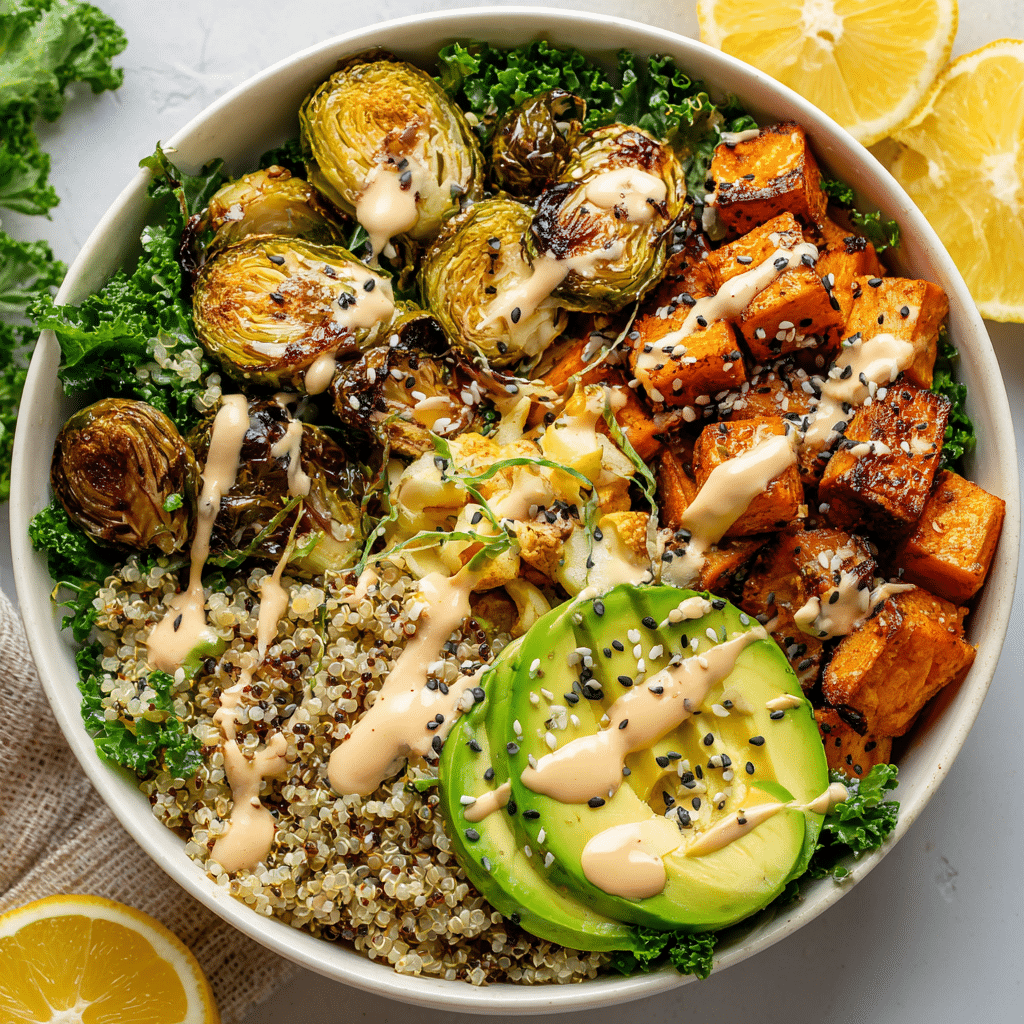
Buddha bowls have become a favorite for those seeking balance, flavor, and simplicity in their meals. A Roasted Veggie Buddha Bowl is more than just a trendy dish—it’s a vibrant, nourishing bowl filled with roasted seasonal vegetables, hearty grains, protein-packed toppings, and a luscious dressing to bring it all together.
Whether you’re meal-prepping for the week or throwing together a healthy dinner, this bowl offers variety, texture, and satisfaction in every bite. Think caramelized sweet potatoes, crispy chickpeas, quinoa or brown rice, tangy tahini dressing, and bursts of freshness from greens and herbs. The best part? It’s entirely customizable and easy to adapt to what’s in your fridge or in season.
Ingredients Overview
Each component of a Buddha bowl plays a role in balancing flavor, texture, and nutrition. Here’s a detailed breakdown of the key elements in a classic roasted veggie Buddha bowl.
Roasted Vegetables
Choose a mix of colorful, seasonal vegetables for maximum variety and nutrition. Popular options include:
-
Sweet Potatoes: Naturally sweet and packed with fiber, they roast to caramelized perfection.
-
Broccoli: Adds crunch and a dose of vitamins A and C.
-
Cauliflower: Mild and nutty when roasted, it soaks up seasoning beautifully.
-
Red Onions: Their sharpness mellows into sweetness during roasting.
-
Bell Peppers: Provide sweetness and color.
Toss vegetables with olive oil, salt, pepper, and a pinch of garlic powder before roasting at 400°F for 25–30 minutes.
Grains or Base
The foundation of your bowl can vary depending on your preference:
-
Quinoa: A complete protein with a light, nutty flavor.
-
Brown Rice: Hearty and satisfying.
-
Farro: Chewy, slightly nutty, and nutrient-dense.
-
Couscous: Light and fluffy—great for quick prep.
-
Leafy Greens: Spinach, kale, or arugula can serve as a fresh, low-carb base.
Protein
To keep things plant-based yet satisfying:
-
Roasted Chickpeas: Crunchy, spiced chickpeas are a popular choice.
-
Tofu: Marinate and bake or pan-fry for added flavor.
-
Tempeh: Fermented and protein-rich, with a firm texture.
-
Boiled Eggs (optional): For a vegetarian (not vegan) option.
Dressing
A creamy, zesty dressing pulls everything together. Some great options:
-
Lemon-Tahini Sauce: Made with tahini, lemon juice, garlic, and maple syrup.
-
Avocado Lime Dressing: Creamy and tangy.
-
Ginger Miso Dressing: Adds an umami kick and brightness.
Toppings & Garnishes
Texture and freshness are key:
-
Sliced Avocado: Creamy and nutrient-rich.
-
Pumpkin or Sunflower Seeds: Add crunch and healthy fats.
-
Microgreens or Fresh Herbs: For a fresh, peppery finish.
-
Pickled Onions or Radishes: Brighten the flavor with acidity.
Step-by-Step Instructions
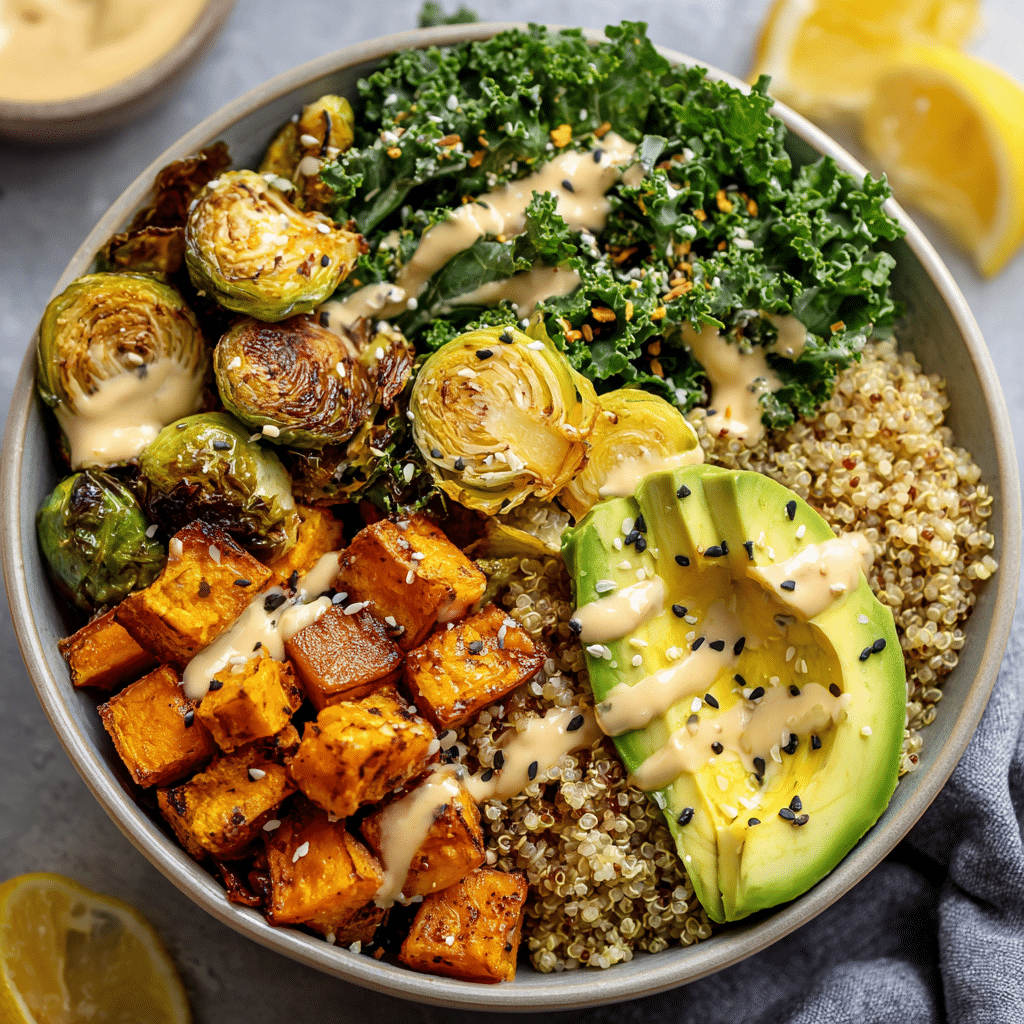
Making a roasted veggie Buddha bowl involves a few simple steps, and most of them can be prepped in advance.
1. Roast the Vegetables
-
Preheat oven to 400°F (200°C).
-
Chop your chosen veggies into uniform bite-sized pieces.
-
Toss with olive oil, salt, pepper, and optional spices like paprika or cumin.
-
Spread on a parchment-lined baking sheet in a single layer.
-
Roast for 25–30 minutes, flipping halfway through, until caramelized and tender.
2. Cook the Grains
-
While veggies roast, prepare your grain of choice.
-
For quinoa: Rinse thoroughly, then cook in 2:1 water-to-quinoa ratio. Bring to a boil, reduce heat, cover, and simmer for 15 minutes.
-
Let grains sit covered off-heat for 5 minutes, then fluff with a fork.
3. Prepare the Protein
-
If using chickpeas: Toss drained, rinsed chickpeas with oil, cumin, smoked paprika, and salt. Roast at 400°F for 20–25 minutes until crispy.
-
For tofu or tempeh: Press and cube tofu, marinate in tamari, garlic, and sesame oil, then bake at 400°F for 25 minutes.
4. Make the Dressing
-
For lemon-tahini: Whisk together 1/4 cup tahini, 2 tbsp lemon juice, 1 garlic clove (minced), 1 tsp maple syrup, salt, and 2–3 tbsp warm water until pourable.
-
Adjust seasoning to taste.
5. Assemble the Bowl
-
Start with a base of grains or greens.
-
Add a scoop of roasted vegetables.
-
Add your protein of choice.
-
Drizzle generously with dressing.
-
Top with avocado, seeds, and fresh herbs.
Each bowl should have a variety of colors, textures, and flavors to keep it satisfying.
Tips, Variations, and Substitutions
Tips for Building a Better Buddha Bowl
-
Color is Key: Aim for at least 3–4 colors in each bowl for visual appeal and nutritional diversity.
-
Batch Prep: Roast a double batch of veggies and cook grains in bulk to build bowls throughout the week.
-
Balance Flavors: Combine sweet (sweet potatoes, beets), savory (tofu, chickpeas), tangy (dressing), and crunchy (seeds, radish) elements.
Flavor Variations
-
Southwest Style: Use black beans, corn, avocado, and a cilantro-lime dressing.
-
Asian-Inspired: Add sesame tofu, edamame, shredded cabbage, and miso-ginger dressing.
-
Mediterranean: Include olives, cherry tomatoes, cucumber, and a hummus or tzatziki drizzle.
Ingredient Substitutes
-
No Tahini? Use almond butter or cashew butter for a creamy dressing.
-
Grain-Free? Use cauliflower rice or a bed of greens.
-
Low-Carb? Skip sweet potatoes and grains, and double up on roasted low-starch vegetables.
Serving Ideas & Occasions
Roasted Veggie Buddha Bowls are ideal for:
-
Meal Prep: Pack components separately and assemble when ready to eat.
-
Lunch or Light Dinner: Satisfying but not too heavy.
-
Plant-Based Entertaining: Create a DIY Buddha Bowl bar with toppings and dressings for guests to choose from.
-
Post-Workout Recovery: Offers a balanced combination of carbs, protein, and healthy fats.
Pair with herbal iced tea or infused water for a refreshing, clean meal experience.
Nutritional & Health Notes
These bowls are a powerhouse of nutrition:
-
High in Fiber: Thanks to vegetables, legumes, and whole grains.
-
Plant-Based Protein: Chickpeas, tofu, and quinoa provide ample protein.
-
Healthy Fats: Avocados, seeds, and tahini boost satiety and heart health.
-
Vitamins and Minerals: Roasted veggies are rich in antioxidants, especially when colorful.
You can tailor the bowl to meet specific nutritional goals—whether it’s low-carb, gluten-free, or high-protein. The balance of macronutrients makes it ideal for energy, digestion, and overall wellness.
FAQ
1. Can I meal prep Buddha bowls in advance?
Yes! Roast veggies, cook grains, and prep proteins ahead of time. Store each component in separate containers and assemble fresh each day. Dress only right before eating to prevent sogginess.
2. What’s the best grain for Buddha bowls?
Quinoa is a popular choice because it’s a complete protein and cooks quickly. Brown rice, farro, and couscous are also excellent. For a low-carb option, use cauliflower rice or leafy greens.
3. How can I make this bowl more filling?
Add extra protein like baked tofu, boiled eggs, grilled chicken (if not vegetarian), or more legumes. A generous portion of grains and a creamy dressing also adds staying power.
4. Can I serve this bowl warm or cold?
Both work! Serve warm in colder months for comfort, or cold as a refreshing summer meal. Roasted veggies are delicious at room temperature too.
5. How do I make crispy chickpeas?
Dry chickpeas thoroughly before roasting. Toss with olive oil and seasonings, then bake at 400°F for 20–25 minutes, shaking the pan halfway through. Let them cool on the pan for extra crispness.
6. What’s a good tahini alternative for dressing?
Almond butter, cashew cream, Greek yogurt, or even mashed avocado can stand in for tahini, depending on your flavor preference and dietary needs.
7. Are Buddha bowls gluten-free?
They can be! Use gluten-free grains like quinoa or rice, and ensure your dressing and toppings are gluten-free. Always check labels on packaged ingredients like miso or soy sauce.